NAIROBI, Kenya, Aug 12 — Africa’s green transition could create millions of jobs over the next decade, but a shortage of skills, limited financing and weak links between training institutions and employers could constrain the continent’s ability to capture the opportunity.
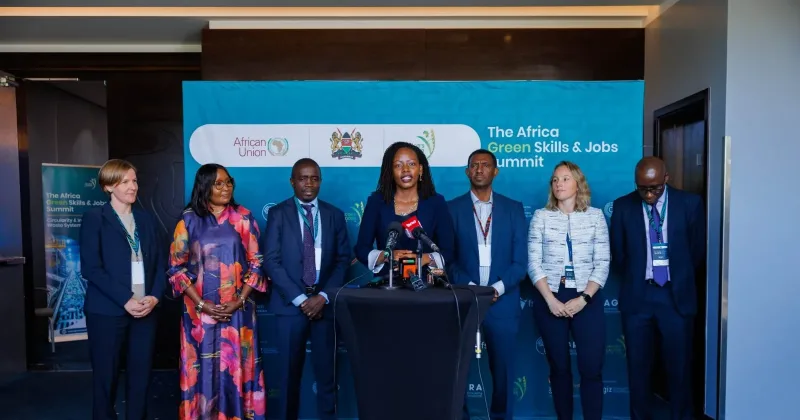
This emerged at the inaugural GreenWorks 4 Africa Forum in Nairobi, where policymakers, investors, businesses and development institutions are examining how investment in clean energy and other green sectors can translate into employment and enterprise growth.
The forum comes as 10–12 million young people enter Africa’s labour market each year, while only about three million formal jobs are created annually, according to the African Development Bank.
Research by FSD Africa, Shell Foundation and Shortlist estimates that the green transition could generate between 3.8 million and 7.9 million jobs by 2030 and 65.9 million to 84.5 million by 2050.
Much of the employment is expected to come from decentralised, service-led activities such as clean cooking, solar home systems, waste recycling and electric two- and three-wheelers.
However, Africa currently accounts for only two percent of the global renewable-energy workforce, while just five percent of African youth have completed formal vocational training.
Less than one percent of climate finance is also directed towards skills development, the research shows.
Sellah Bogonko, Co-Founder and CEO of Jacob’s Ladder Africa, said the challenge requires stronger coordination between governments, employers, investors and training institutions.
“Our ambition is to begin building something larger than a two-day gathering: an Africa-wide coalition committed to figuring out how Africa can create green jobs at scale.”
“This is not a summit, conference or another forum. It is a Thinkers Hub and Collaboration Hive designed to leave people better equipped to act.”
Kevin Munjal, Director of Impact Development at FSD Africa, said young people should be positioned to benefit from the economic changes created by the green transition.
“For Africa’s young people, the green transition is not an abstract future.”
“It will shape the jobs they can access, the businesses they can build and the economies in which they will live.”
The Nairobi forum is focusing on renewable energy, climate-resilient agriculture, e-mobility, green infrastructure and circular economy activities.
Participants are also assessing how finance, technology, regulation and skills development can be aligned to help green enterprises access markets and expand.