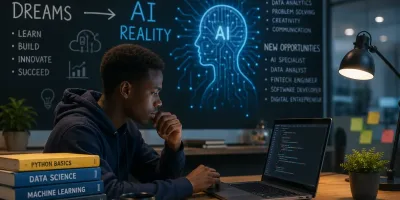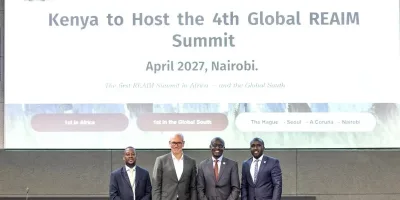

NAIROBI, Kenya Aug 17 – The global artificial intelligence revolution could result in a net gain of about 78 million jobs by 2030, despite the expected displacement of millions of workers, Kenya’s Special Envoy on Technology has said.
Speaking during an interview on Capital In The Morning Show, Phillip Thigo said an estimated 170 million jobs could be created, while about 92 million could be lost as AI transforms workplaces.
He said job displacement is not unique to artificial intelligence.
“The reality is jobs will be lost. And, and, and that’s a hard fact, and I have to tell people this. Unfortunately, you cannot sugarcoat that,” he said.
The warning is consistent with findings from the World Economic Forum’s Future of Jobs Report 2025, which projects that technological and other structural changes could create 170 million jobs globally by 2030 while displacing 92 million, resulting in a net increase of 78 million jobs. The report also identifies AI and information-processing technologies among the factors expected to drive both job creation and displacement.
The Special Envoy encouraged professionals to integrate AI into their daily work to improve productivity.
“The issue I always tell folks is, where will you be? In the net loss, or the net gain? And it means anybody today who does not have your job plus AI will be displaced,” he said.
He gave journalists as one example, saying AI could be used to improve efficiency in research, scripting and other newsroom tasks rather than simply being viewed as a replacement for journalists.
“For me, that’s how, that’s how people look at this. I’d look at it from the point of not losing my job, but being more efficient in a way that I can do better,” Thigo said.
He also called for changes in education to prepare both current workers and young people entering the labour market. He said the focus should include reskilling and upskilling people already in employment while ensuring teachers and learners are prepared for an economy where AI will increasingly be part of different professions.
“You’re not training AI. You’re training somebody on the content, whether it’s doctor, whether it’s a lawyer, whether it’s a teacher, whether it’s science. But you are training them when you’re augmenting artificial intelligence on top of it. For me, that’s kind of the future of education,” Thigo said.