NAIROBI, Kenya, Aug 21 – Nairobi has long been the epicentre of Kenya’s startup ecosystem, supported by access to capital, skilled talent, technology companies, financial institutions and a diverse business environment.
That concentration has made the capital the preferred destination for startups and investors, leaving cities such as Mombasa, Kisumu, Nakuru and Eldoret with a smaller share of venture capital and technology investment.
But that picture is beginning to change.
Counties are investing in innovation hubs, incubation centres and digital infrastructure, while entrepreneurs are increasingly building businesses around the economic strengths of their regions.
The shift raises a bigger question for Kenya’s technology economy: are the country’s next generation of high-growth startups emerging outside Nairobi, or are regional ecosystems still largely dependent on the capital for money, talent and networks?
Mombasa: Building around trade and logistics
Mombasa, Kenya’s second-largest city, has traditionally been associated with tourism, but its position as the country’s main port and a regional centre for trade is creating opportunities for technology businesses.
One of the companies associated with the coastal ecosystem is Watu Credit, an asset-financing and financial inclusion company founded in 2015.
The company enables customers to acquire motorcycles, smartphones, electric vehicles and tuk-tuks through lease-to-own financing and buy-now-pay-later options, targeting unbanked and underserved customers.
Watu Credit says it has disbursed more than $1 billion in credit and issued more than six million loans since its establishment.
The company has expanded beyond Kenya into markets including Nigeria, Uganda and South Africa.
In 2022, Watu Credit raised $7 million from Verdant Capital to support its expansion into Uganda.
Another company associated with Mombasa is StockApp, an artificial intelligence-powered retail technology platform founded by Ken Gitonga in 2019.
The platform helps small businesses move away from manual and paper-based processes by digitising their operations and providing data to support business decisions.
Other startups associated with the city include Revital Healthcare, Red Splash and Aqualedger.
Mombasa’s growing ecosystem has also been reflected in global rankings.
The 2025 Global Startup Ecosystem Index ranked Mombasa as the second-ranked Kenyan city after Nairobi. Nairobi was ranked 107th globally, while Mombasa was ranked 916th among 1,000 cities.
The report said Mombasa recorded a growth rate of more than 104 percent, compared with more than 22 per cent for Nairobi.
Tala-Kenya General Manager Annstella Mumbi says investors are slowly looking beyond Nairobi, although the trend remains at an early stage.
“Mombasa is interesting because of trade, logistics and port-linked commerce. Therefore, any startup solving for cross-border trade or maritime logistics has a natural reason to be there.”
That gives Mombasa a potential advantage over Nairobi: its technology ecosystem can develop around a physical economy built on trade, logistics, tourism and the port.
Kisumu: Technology Meets the regional economy
Kisumu is also emerging as an alternative location for startups, supported by its position as a commercial centre for western Kenya and its proximity to markets around Lake Victoria.
Entrepreneurs are attracted by lower operating costs, including cheaper office space and accommodation compared with Nairobi.
One example is AquaRech, a technology platform serving fish farmers.
The company uses mobile and Internet of Things technology to connect fish farmers with feeds, fingerlings and markets while also providing access to buy-now-pay-later financing.
The model addresses challenges facing small-scale fish farmers, including access to quality inputs, markets and working capital.
Other businesses in Kisumu’s wider innovation ecosystem include AgriBORA, Rafode and Kijenzi, which have developed technology and financial solutions targeting businesses and underserved communities.
Kisumu’s location on Lake Victoria also creates opportunities for startups working in agriculture, fisheries, logistics and cross-border trade.
Tala-Kenya General Manager Annstella Mumbi notes Kisumu’s advantage in cross-border fintech.
“Kisumu is emerging as a regional hub for agriculture-linked fintech and cross-border trade with Uganda and Tanzania, given its position on Lake Victoria.”
The evidence will determine whether Kisumu is becoming a genuine startup ecosystem or simply developing the infrastructure to support one.
Konza: Can a planned technology city create a new ecosystem?
Machakos County is also becoming part of Kenya’s technology investment story through Konza Technopolis.
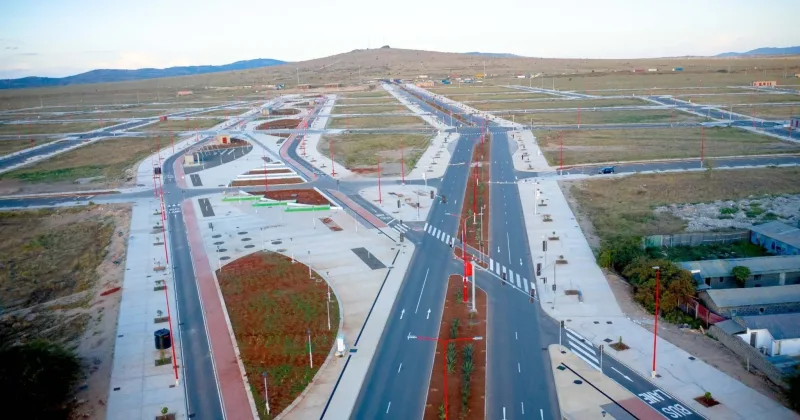
The project was conceived as part of Kenya’s ambition to build a technology and knowledge-based economy and is being developed on a 5,000-acre site along the Nairobi-Mombasa highway.
Konza is intended to bring together technology companies, research institutions, universities, innovation centres and other businesses.
Several firms and innovation initiatives have established a presence within the wider Konza ecosystem, including Personal Watchguard, Ekraal Hub, H-Pass and Timbuktoo Greentech Hub.
But the key question is no longer whether Konza has been designed as a technology hub.
It is whether the infrastructure is producing a sufficiently large ecosystem of companies, jobs, investment and research.
Data from the Kenya National Bureau of Statistics (KNBS) shows that Konza Technopolis attracted Sh99.4 billion in investment from 78 investors by the end of 2025. A total of 17 buildings had been completed, with 26 under construction. The number of startups based at the technopolis rose to 51 from 20 in 2024, while innovations supported increased to 55 from 22.
Konza’s location gives it another potential advantage: it provides technology infrastructure outside Nairobi while maintaining access to the capital, major transport corridors and national markets.
That could make it a bridge between Nairobi’s established technology ecosystem and a more decentralised innovation economy.
Nakuru and Eldoret
Nakuru’s position as one of Kenya’s major agricultural and commercial centres gives it a potential foundation for an innovation ecosystem built around agriculture, manufacturing, logistics and food processing.
The city is also strategically located along the Northern Corridor, connecting Nairobi with western Kenya and neighbouring markets.
The opportunity for Nakuru may therefore be less about replicating Nairobi’s technology model and more about developing businesses that solve problems in the region’s dominant economic sectors.
Eldoret has a similarly strong economic base on which to develop a regional technology ecosystem.
The city’s agricultural economy, universities, healthcare institutions and position as a commercial centre for the North Rift provide potential markets for startups working in agritech, health technology, logistics and digital services.
Like Kisumu and Nakuru, Eldoret’s challenge will be converting a strong regional economy into an ecosystem where technology companies can develop, raise capital and scale without having to relocate to Nairobi.
The emergence of ecosystems outside Nairobi does not mean the capital is losing its dominance.
Nairobi continues to account for the largest concentration of venture capital, technology companies, financial institutions, multinational firms and specialised talent.
The Kenya National Innovation Agency (KeNIA) 2024 Kenya Innovation Outlook shows that Nairobi-based companies attracted $3.62 billion, or 95.7 percent, of the $3.79 billion raised by Kenyan startups between 2015 and the third quarter of 2024. Mombasa followed with $73.4 million, Bungoma with $54.6 million, Kisumu with $8.5 million, and Eldoret with $1.08 million. Nakuru was not separately reported.
For startups outside Nairobi, access to capital therefore remains one of the biggest constraints.
A founder may be able to develop a product in Kisumu or Mombasa, but raising the money needed to scale may still require access to Nairobi-based investors.
Ken Njoroge, co-founder of Cellulant, says investors offer more than capital by opening doors to networks, customers, partners and other connections that can accelerate startup growth.
The same problem applies to specialised talent.
Digital businesses can increasingly recruit and operate remotely, but companies requiring experienced engineers, product managers, finance specialists and other highly skilled workers may still find Nairobi’s deeper labour pool difficult to replicate elsewhere.
A government-commissioned tracer study found that 44 percent of graduate engineers were concentrated in Nairobi, followed by Kiambu, Mombasa, Eldoret, Kisumu and Nakuru.
Infrastructure Alone Is Not Enough
Counties are increasingly investing in technology hubs, incubation centres and digital infrastructure.
But physical infrastructure alone may not be enough to create sustainable startup ecosystems.
A successful technology hub requires entrepreneurs, customers, investors, skilled workers, universities, mentors and links to markets.
Tala’s Mumbi argues that counties need to move beyond announcements and build ecosystems that can genuinely support businesses.
“That means designating and investing in special economic zones or innovation districts with the regulatory, tax and infrastructure incentives to make them genuinely attractive — not just on paper.”
She says counties also need predictable business registration and licensing, reliable digital and physical infrastructure and the ability to operate at standards expected by investors.
“The county that moves first and most seriously on this, building a real SEZ, not just an announcement, has a genuine opportunity to become the hub for economic growth outside Nairobi.”
Can the Next Startup Boom Come From Outside Nairobi?
The evidence suggests that Kenya’s innovation economy is beginning to spread beyond the capital, but the shift is still at an early stage.
Mombasa has a natural advantage in trade, logistics and the blue economy.
Kisumu can build around agriculture, fisheries and Lake Victoria trade.
Nakuru has opportunities in agriculture, manufacturing and logistics.
Eldoret can leverage agriculture, healthcare, education and the wider North Rift economy.
Konza offers the possibility of a purpose-built technology and research ecosystem.
But the existence of startups and innovation hubs does not necessarily mean that Kenya has achieved decentralised innovation.
The real test is whether companies can start, raise capital, attract talent, scale and reach international markets without being forced to move to Nairobi.
If regional ecosystems succeed, Kenya may not need to create another Nairobi outside Nairobi.
Instead, it could develop a network of specialised innovation centres, each built around the economic strengths of its region.
The result would be a more diversified startup economy in which Nairobi remains the country’s largest technology hub, while cities such as Mombasa, Kisumu, Nakuru and Eldoret develop their own areas of competitive advantage.