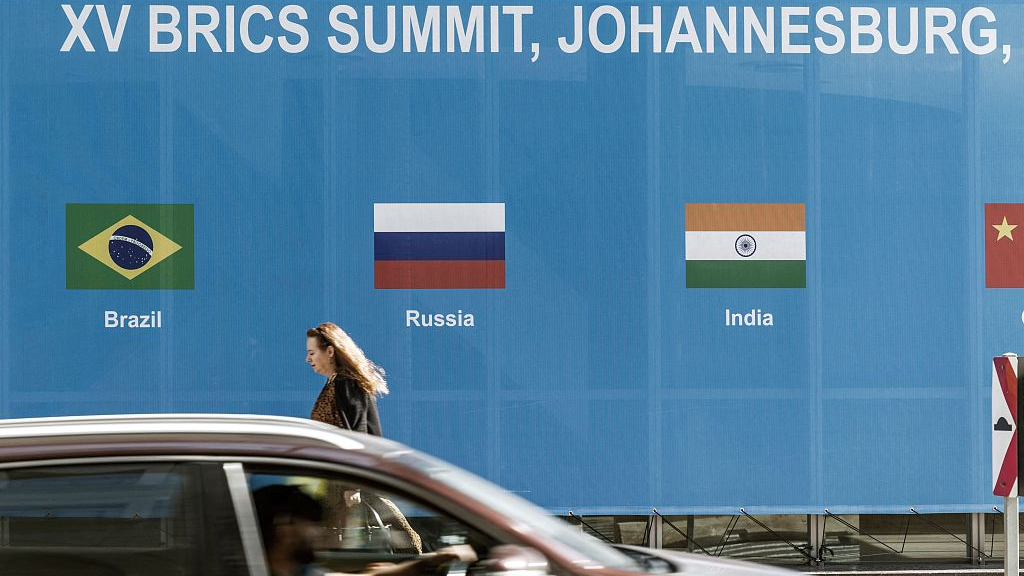
One of the highlights during the recently concluded 15th summit of the Brazil, Russia, India, China and South Africa (BRICS) emerging economies in Johannesburg, South Africa was the keynote address by Chinese President Xi Jinping at the China-Africa Leaders’ Dialogue. This was Xi’s 10th visit to the continent.
Xi noted that over the past 60 years, under the banner of Pan-Africanism, African countries have made big strides on the path to independence, seeking strength through unity and integration. African leaders have demonstrated the strength of Africa in the struggles to uphold multilateralism and the common interests of developing countries. With steady progress under Agenda 2063 of the African Union (AU), the official launch of the African Continental Free Trade Area, and growing coordination among the sub-regional groups, Africa is becoming an important pole with global influence.
In 2013 after he became Chinese President, Xi travelled to Africa for his first foreign visit and announced the principle of sincerity, real results, amity and good faith for China’s Africa policy. Over the past 10 years, China has stayed committed to this principle. China and Africa have pressed ahead on the path of solidarity and cooperation, stood for justice amid shifting global dynamics, and looked out for each other in face of the COVID-19 pandemic. China-Africa relations have risen to new heights and entered the new stage of jointly building a high-level China-Africa community with a shared future.
Xi said that China is marching toward the Second Centenary Goal of transforming into a great modern socialist country in all respects that is prosperous, strong, democratic, culturally advanced, harmonious and beautiful. It is pursuing the great rejuvenation of the Chinese nation on all fronts through a Chinese path to modernisation. Similarly, Africa is moving at an accelerated speed toward the bright prospects envisioned in Agenda 2063 that include peace, unity, prosperity, and strength.
Africa and China need to work together to promote a just and equitable international order. The two partners should carry forward the spirit of sticking together in times of adversity, practice true multilateralism, and unequivocally oppose vestiges of colonialism and hegemony.
China is ready to work with Africa to implement the new vision of common, comprehensive, cooperative and sustainable security, advocate the resolution of differences and disputes through dialogue and cooperation, facilitate the political settlement of international and regional hotspot issues, and safeguard world peace and stability. The two countries should uphold harmonious coexistence between man and nature, and protect the security of the global eco-environment.
The two partners should reject the winner-takes-all approach, and build an open world economy where developing countries are better involved in the international division of labour and share the fruits of economic globalisation. We should overcome estrangement between civilizations through exchanges, promote inclusiveness and mutual learning between civilizations, and make new contributions to human progress.
Advancing modernisation through integration is the independent choice made by African countries. China has all along been a firm supporter, and walking side by side with Africa. China has helped Africa build a large amount of connectivity infrastructure, carried out extensive cooperation with the AU and sub-regional organisations, and assisted the construction of several signature Pan-African projects, including the AU Conference Center and the Africa Center for Disease Control and Prevention.
China will work with Africa to enhance the synergy of their development strategies. Through the Belt and Road cooperation, the Forum on China-Africa Cooperation (FOCAC), and in light of the AU Agenda 2063, China will intensify dialogue and communication with Africa at various levels, and support African agencies for integration, including the AfCFTA Secretariat, the Pan-African Payment and Settlement System and the African Union of Broadcasting in creating cooperation mechanisms with China.
China will work actively at the G20 Summit in September to support AU’s full membership in the group. China supports making special arrangements on the U.N. Security Council reform to meet Africa’s aspiration as a priority. China will call on multilateral financial institutions to enhance the say of African countries.
China promised to continue supporting Africa’s Industrialisation and economic diversification. In implementing the nine programs under the FOCAC framework, China will channel more resources of assistance, investment and financing toward programmes for industrialisation.
China will launch the plan for China supporting Africa’s agricultural Modernisation, help Africa expand grain plantation, encourage Chinese companies to increase agricultural investment in Africa, and enhance cooperation with Africa on seed and other areas of agro-technology. The country will host the second Forum on China-Africa Cooperation in Agriculture in Hainan this November.
China will launch the plan for China-Africa cooperation on talent development. China plans to train 500 principals and high-calibre teachers of vocational colleges every year, and 10,000 technical personnel with both Chinese language and vocational skills for Africa. China will invite 20,000 government officials and technicians of African countries to participate in workshops and seminars. To support Africa in strengthening education and innovation, the country will launch the China-Africa Universities 100 Cooperation Plan and 10 pilot exchange programmes of China-Africa partner institutes.