
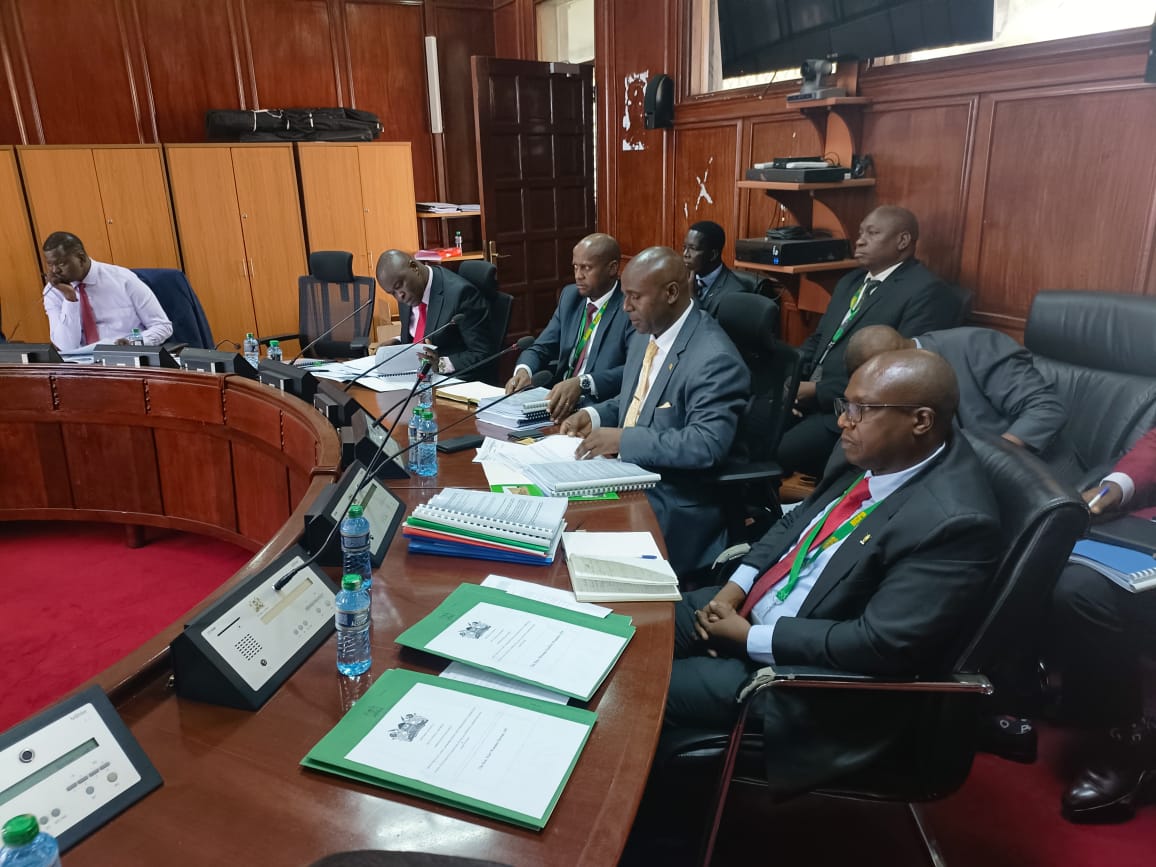
NAIROBI, Kenya, Feb 24 – Kenyans are on the verge of a food crisis and escalation of food prices following the failure of the government to disburse funds for buying grains for the Strategic Food Reserve.
The National Cereal and Produce Board (NCPB) Director General Joseph Kimeto told Members of Parliament that they are currently buying maize for commercial purposes after the treasury failed to release the funding.
“We did not participate in buying food for strategic food reserves so the maize we are buying is for commercial training. As you know NCPB is a commercial government institution and therefore we buy cereals across the country,”said Kimeto.
He made the revelations before the Public Investment Social Services Administration and Agriculture Committee.
The situation is quite dire as the National Granary revealed that so far they have 50,000 bags of maize which are being procured and stored on behalf of the World Food Programme and not Kenyans.
This comes amidst depleted emergency stocks in the Strategic Food Reserve (SFR) nearly five years ago with the government announcing that it will no longer buy stocks for relief but would instead embrace cash transfers to the affected households.
In 2020, The NCPB had requested Sh10 billion to purchase maize for the Strategic Food Reserve (SFR) in the current financial year to restock the depleted grain at the facility.
This comes amidst dropped maize production across the country due to the ravaging drought in the country which has led to escalated Unga prices.
The Strategic Food Reserve (SFR) was established in 2015 and tasked with the responsibility of ensuring Kenyans have sufficient food stocks.
The reserve was expected to stabilize the food supply levels and maintain adequate strategic food reserves in physical stock or cash equivalent at any one given time.
During President Uhuru Kenyatta’s regime, the Ministry of Agriculture recommended the dissolving SFR while proposing that its role be taken over by NCPB.
Former Treasury Secretary Ukur Yatani disbanded the Strategic Food Reserve (SFR) board in an apparent effort to end turf wars that had rocked management of the national granary.
Yatani set the wheels in motion after publishing legislation to revoke the laws establishing the food reserve fund.
Meanwhile, the National Cereals and Produce Board (NCPB) has announced that they have increased the prices of buying maize from farmers.
Kimeto stated that they have revised the prices upwards from Sh5,100 to Sh5,600 for a 90-kilogram bag.
“Right now, we are open, and farmers can transact with us. The price was Sh5100 for a 90kg bag, but we have revised it to Sh5600,” he stated.
“Any farmer who can deliver on that price we pay it in cash through MPESA transaction so there’s no delay at all,” Kimeto said.
Farmers had complained that they risk making losses as the government had announced it will be opening up a duty-free window for maize imports to bridge the deficit.
So far, the NCPB has stored 50,000 bags for commercial purposes.
Kimeto further told MPs that the process of selling subsidized federalizer is ongoing in 12 counties.
The government is intending to distribute 6 million bags before the end of the planting season in the North Rift, South Rift and Lake Basin area.
“The target is to ensure the supply is made on time between now and the planting time which is in the next one month,” he said.
“Now people are saying they are smelling rain so now we are going to reap big. We are working with the county governors and elected leaders in this initiative,” Kimeto added.
MPs led by Kaiti MP Joshua Kimilu have however raised concerns that the quality of the fertilizer is substandard yielding negative results during the planting season.
“Farmers are crying that after using the fertilizers it all dries up due to poor rains. We lost rain for two weeks, those who used other fertilizers their crops prospered but for the government fertilizer the crops are all lost,” he said.
Erratic rainfall and high input costs, particularly fertilizer, have reduced maize and other food crop production, worsening the country’s food situation.
In 2022, the national treasury released Sh3.55 billion for the procurement and distribution of subsidized fertilizer to farmers through the Fertilizer Subsidy Programme, which distributed 1.4 million 50kg bags to farmers across the country.
Maize production is approximately 40 million bags per year, and fertilizer use accounts for 30 per cent of productivity, implying that fertilizer use could increase yields by approximately 4.2 million bags.