
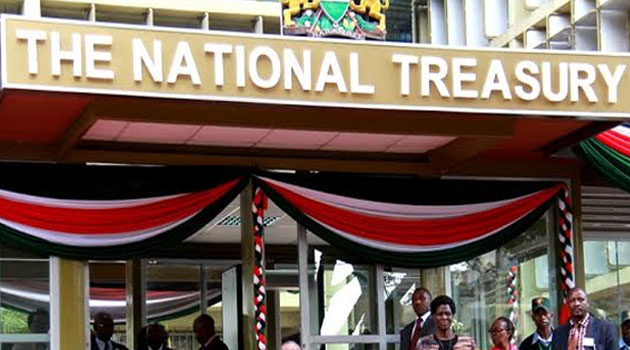
NAIROBI, Kenya, Jul 16 – The National Treasury has directed all Ministries, State Departments, and Agencies (MDAs) to thoroughly review their financial statements before submitting them to the Office of the Auditor-General (OAG) as part of a government effort to achieve a zero fault audit status.
In a circular signed by Principal Secretary Chris Kiptoo, the Treasury emphasised that audit committees must also examine the statements and all supporting financial documents to ensure their accuracy and integrity prior to submission.
“All Accounting Officers shall ensure that draft financial statements are reviewed to confirm completeness, accuracy and compliance prior to their submission to the Auditor-General. All Accounting Officers are directed to actively promote and support the Zero Fault Audit Initiative,” he said.
The Treasury has also mandated that all draft financial statements undergo a formal pre-submission review by three key oversight bodies, including Public Finance Management Standing Committees, Internal Audit Units, and Audit Committees.
Kiptoo noted that this process is designed to guarantee the completeness, accuracy, and compliance of the statements before they reach the Auditor-General’s office.
Additionally, accounting officers must personally review all responses to management letters and letters of representation, ensuring that only vetted and factual responses are shared with the Auditor-General.
“All Accounting Officers must accord these directives the highest priority and demonstrate proactive leadership to ensure their institutions meet the principles of transparency, accountability, and sound financial stewardship,” he stated.
Further, the Treasury called for stronger collaboration between Accounting Officers, Audit Committees, and external auditors.
The latest directive follows a high-level consultative meeting convened virtually on May 28, 2025, by the Chief of Staff and Head of Public Service.
The forum brought together Principal Secretaries, CEOs of State Corporations, Audit Committee members, and Heads of Internal Audit Units.
During the meeting, key concerns were raised about persistent weaknesses in financial management practices across public entities, which threaten the credibility of audit outcomes and undermine transparency in the public sector.
The Zero Fault Audit drive is part of the government’s broader reforms aimed at restoring public trust in state institutions.