NAIROBI, Kenya, Feb 9 – Kenya still has a low supply of warehousing facilities despite increased demand for storage and distribution spaces brought about by a surge in e-commerce.
This is according to Knight Frank Kenya CEO Mark Dunford, who has called on real estate investors to invest in the facilities to fill in the gap.
“During the onset of the Covid-19 pandemic we saw a huge need for warehousing even in developed markets such as the United States and Europe as e-commerce grew and more businesses needed storage and distribution facilities and they developed them,” he said.
In Kenya however, where e-commerce has also grown significantly, Dunford noted that the facilities as still scarce.
“As disposable incomes continue to grow boosting demand for online shopping in the country, the need for storage and distribution facilities will also grow pointing to why we need to develop them,” he said.
Further, he noted that with the ongoing drought and climate change crisis, warehouses also offer a lifeline on matters food security as food can be stored for the future.
“We export a lot of food yet we don’t have places to store enough for times of need when issues like drought arise, this can be addressed by warehousing facilities,” he said.
He noted that the lack of storage facilities has seen Kenya become a net food importer which is laughable since the East African region is known as an agricultural economy.
According to the latest Knight Frank Kenya Market Update, warehousing facilities currently available in Kenya are outdated and do not meet the threshold standards for modern warehouses.
“There is a rising demand for quality industrial facilities (Grade A) in the country to fill this gap,” the update notes.
Knight Frank notes that the warehousing market niche is currently being exploited by Africa Logistics Properties (ALP), the developers of ALP North and ALP West.
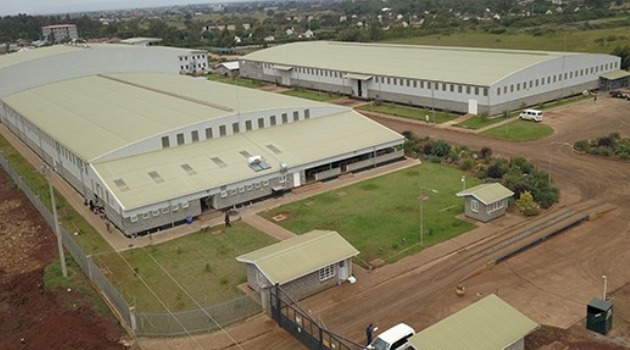
ALP, a modern warehouse supplier, completed Phase 4 (ALP Kyoga) of their West Logistics Park – located in Tilisi, along Nairobi – Nakuru Highway and covers 49 acres on which 8 phases are planned.
Phase 1 is complete and has an occupancy rate of 86 per cent while construction of phases 2 and 3 is ongoing.
ALP warehouses are grade A and accommodate green building credentials in their design – they are EDGE certified