
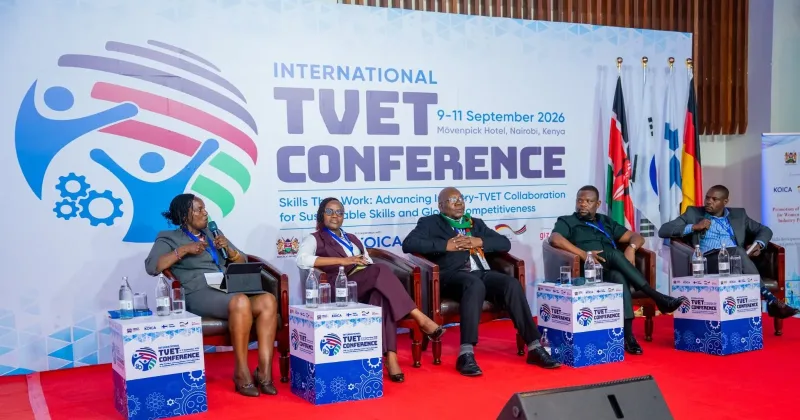
NAIROBI, Kenya, Sept 12 – Kenya is stepping up efforts to link technical and vocational training with industry as it seeks to equip young people with skills that match the job market.
The push for stronger industry-based training was a key outcome of the International TVET Conference 2026, which brought together government officials, employers, training institutions, development partners, researchers and young people.
The three-day conference placed Dual Training at the centre of discussions on how Kenya can prepare workers for a changing economy.
The model combines classroom learning with structured workplace training, allowing students to gain practical experience while completing their studies.
In Kenya, Dual Training has been adapted to allow a significant part of training to take place in companies.
The model is already being implemented through partnerships involving more than 2,500 industry partners, with thousands of young people benefiting from industry-linked training.
Participants said greater employer involvement would help ensure graduates leave training institutions with skills that meet workplace requirements, including professional standards and new technologies.
The challenge now is to expand the model.Kenya has made progress in including Dual Training in its wider TVET reforms, but delegates called for successful partnerships to be turned into sustainable programmes that can reach more institutions, companies and young people.
Employers were urged to take a bigger role in deciding the skills needed by the economy instead of only recruiting graduates after they complete training.
The conference also highlighted partnerships with Germany, Finland and South Korea, as well as support from GIZ and other development partners, in strengthening Kenya’s TVET system.
Delegates said there is no single model for preparing the workforce of the future but stressed the need for stronger industry links, quality assurance, trainer development, innovation and workplace experience.
The discussions also focused on moving from policy to implementation, with participants calling for commitments made during the conference to create more opportunities for young people.
Closing remarks delivered on behalf of the Principal Secretary for the State Department for Technical and Vocational Education and Training, Dr Esther Thaara Muoria, by Director of Recognition of Prior Learning Stanley Maindi, said the success of the conference would be judged by its impact.
Maindi said the focus should be on sustained partnerships, stronger training institutions, greater company participation and more young people gaining skills and job opportunities.
For Kenya, Dual TVET is emerging as a link between education and employment as employers continue to seek workers with practical, market-ready skills.
The conference ended with a call for the government, industry, training institutions and development partners to turn the commitments into practical action.