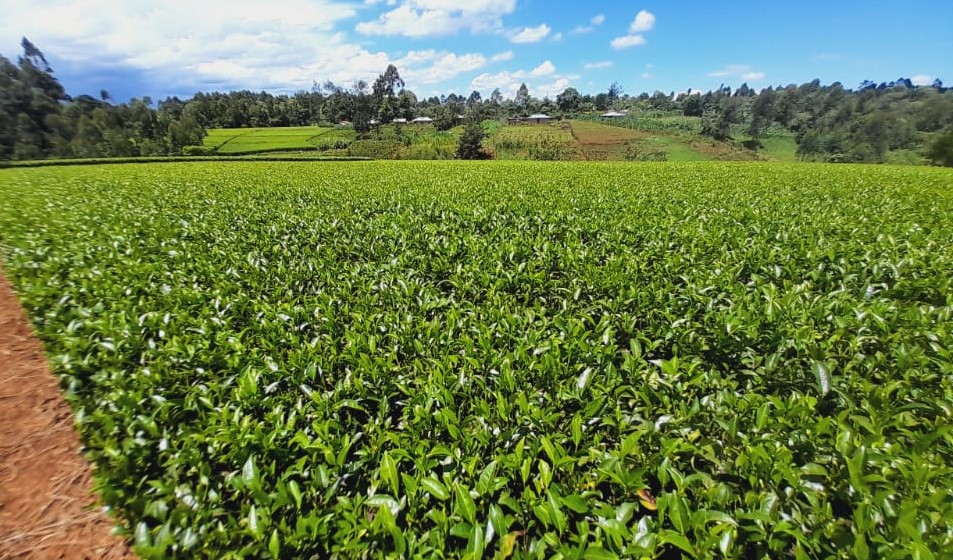
Murang’a, Kenya, Jan 24 – The Kenya Tea Development Agency(KTDA) is in the process of supporting farmers’ venture into the processing of orthodox tea in its allied factories in a bid to increase their revenue.
KTDA Chairperson David Ichoho said they are going to install orthodox tea processing machines in 13 factories in various places in the country.
While addressing tea directors during the weekend in Murang’a, Ichoho noted that the national government has pledged to give Sh800 million to assist in the procurement of the machines.
“The machines will help in processing of orthodox tea which has high demand in the international markets and will eventually enable farmers to get more returns,” said the chairperson.
Ichoho noted that various varieties of orthodox tea which include oolong, green, white or black tea have a high demand and that KTDA has sourced for a market that requires over 2 million kilos annually against a local production of about 500,000 kilos.
Currently, KTDA factories produce a tea variety commonly known as Cutting, Tearing and Curling (CTC) that generates less income as compared to orthodox tea.
“Our plan is to increase our production of orthodox tea because the demand is high and some factories have already procured the machines using their own resources,” Ichoho said.
Ichoho noted that over 95 per cent of the locally produced tea is exported while only five percent is consumed locally, which he said exposes the produce to global market fluctuations.
He cited the political instabilities experienced in countries such as Pakistan and Iran which are some of the biggest consumers of Kenyan tea.
The chairman further observed that KTDA is eying to tap a wider market in the African continent.
“We want to tap a big market in Africa which has a population of more than 1.4 billion under the policy of the African Continental Free Trade Area. This will ensure our tea is not highly affected by fluctuation of overseas currencies,” he added.
Ichoho continued, “If we are able to open tariff and non-tariff barriers and approach individual countries diplomatically, we will be able to expand our market.”
In 2021, Kenya was ranked third among the largest tea producers globally after China and Sri Lanka.
The chairperson however decried poor tea production which was attributed to the drought experienced in the country since last year.
For the last six months, Ichoho said the country produced 542,000 kilos of green leaf as compared to 605,000 kilos that were produced between January and June 2022.
He said the sector, however, has a bright future and that farmers made Sh19 billion more last year from the crop after being paid about Sh63 billion.
He further confirmed that 75 percent of all tea earnings were paid to the farmers and expressed confidence that the figure will go up with time.
The chairperson further noted that since the agency reduced the interest rate for loans issued to farmers through GreenLand Fedha, a subsidiary company owned by KTDA, more farmers have been applying for credit facilities.
In December 2021, KTDA slashed the interest rate from 21 percent to 8 percent in a move meant to increase access to affordable credit for smallholder tea farmers.