Assessment of the Kenya Kwanza’ 100 days in office have been fairly generous and even the Azimio supremo, Raila Odinga, has been generous at 4/10, but nevertheless critical in the issues he has raised. Well, to begin with, by all standards there is very little reason to fault the current regime on what they have done given the circumstances that have obtained both globally and locally for some time. The COVID-19 pandemic and the crisis occasioned by Russia’s invasion of Ukraine stalled the global economy by hitting most economies where it hurts most: oil and grain supply chain.
But governments all over the world are evaluated on their failures and even if success is overwhelming, it is failures that arouse public discourse. Suffice to note then, even with the prevailing circumstances, the 100 days score card is predicated on the lofty goals the Kenya Kwanza campaign trail had set for Kenya. They disclaimed the economic turbulence that characterised the years 2020 and 2021 and built their campaign on grandiose promises, which critics have touted as false, hateful and hurtful messages that whipped emeotions. In fact, the biggest headache is not whether they achieve their objectives, it is the fact that Kenyans were conscious and fairly engaged. Therefore, the bold statements they made during the campaign and the posture they had with vivid descriptions of how they would quickly fix the economy from the bottom up, means that the threshold for failure or success is predicated on how life changes for the common mwananchi. Therefore, the reason why 4/10 seems generous, is because, for the common mwananchi, that flow of capital that has been conspicuous at the macro level is yet to and probably might take some time to trickle down to the microeconomy.
In most Kenyans’ minds today, there is this stark reality that we chose the hustlers fund over social protection, we chose quick fixes on our immediate problems rather than a strategic and long-term investment in sustainable solutions that are alive to the very poor among us. Therefore, whereas the president as a leader has scored highly on all his promises, the economic turnaround sounds like Karl Marx predictions of the proletariat revolution which, as Antonio Gramsci in his theory of hegemony established, was nothing but a mirage. Granted, the president unprecedentedly delivered on his promises. His fidelity to his election promises sets a new norm. Even leaders who contributed very little or probably added no political clout to his team have been rewarded. In fact, the manner in which some of these ‘loyalist’ got to very lofty positions seem to have left some bemused and still thinking they are dreaming rather than hit the road running. One hopes that they will vindicate the president by outdoing themselves.
The launch of the hustlers fund inside 100 days is also a big score, but that is where it ends. Lots of questions remain unanswered and Operation Linda Ugatuzi has gone to court with some very germane questions which can easily deal a fatal blow to the hustlers’ fund. How this fund will build the economy from bottom up is also not clear because as it is, most of the borrowers are on a consumption spree and technically getting into a vicious cycle of debt. The statistics, even without clarity on who is generating the data and from where are good and Kenya Kwanza loyalist bandy the numbers with reckless abandon. But the fundamental question is – even the billions of Kenya shillings have been borrowed, saved and paid back; what is the value add to the economy? So, what if money has been borrowed and paid back? Big score on keeping the promise, but the crux is the contribution these funds and the current regimes tenure will have on the lives of the ordinary Kenyans and local economies in different areas is what we are looking for.
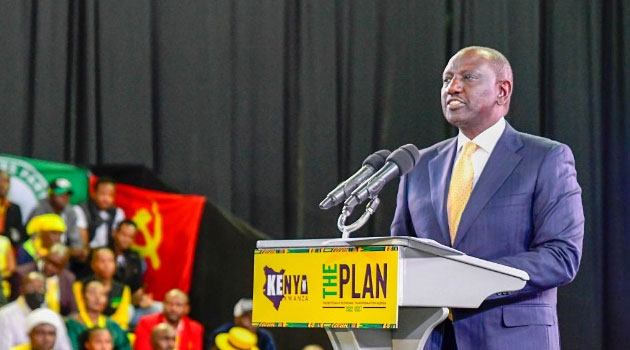
Suffice to note, the first chapter of President William Ruto the astute politician with a never say die attitude has been a great story. Our president recently, on the campaign trail, told us he was on a mission with no luxury to retreat or surrender. Mission accomplished. The beautiful story of the ordinary Kenyan who hailed from a humble background, worked from a chicken seller, dared to believe, and worked hard to build a juggernaut – powered by the ordinary Kenyans along the streets and in different hamlets all over the country – to become the president of Kenya will amount to nothing if the real hustlers will still be struggling with the same challenges at the end of his presidency. You see, the legacy of the current regime will have very little else other than its success story in addressing the plight of the majority poor. This chapter of President William Ruto’s political legacy will only be a successful addition to the first chapter that enthroned him to the presidency only if the current regime goes out of its way to wean us out of the social and economic insecurities that have deeply entrenched our identification with tribes and ethnicities.
As I have argued before, promises in an election are good because they give the citizenry a benchmark on which to evaluate the establishment constructively. And therefore, Raila Odinga’s constructive critique of the establishment in the interest of the citizenry simply serves both the interest of the regime and majority Kenyans, and certainly not his. You see, if the current regime is scoring poorly in its 100 days, it is doing so simply because it made lofty promises which appears to have won it the elections. And as a fledgeling democracy, we are privileged to have solid voices in Azimio led by Raila Odinga, Martha Karua and Kalonzo Musyoka and the emerging authorities like Jubilee SG Hon Jeremiah Kioni voicing constructive critiques of the establishment. For Kenyans, it is a win-win situation.
If by offering such constructive critiques, Azimio leaders push the current regime to implement all its promises even if by doing so, the president will win Kenyans and pave a smooth sailing path for himself in 2027, it will be a great contribution to Kenyans by Azimio. On the other hand, if by keeping the public sphere vibrant through constructive critique and offering of alternative leadership Azimio leaders succeed in exposing the ills of this regime and paint a picture of how as alternative government they have what it takes to remedy these ills, it is Kenyans who will win, especially if at the end of the day they have a robust basis upon which to send the current regime home. Constitutional term limits and the elections cycle means that continuous constructive engagements on issues of public interest by Azimio will certainly help Kenyans evaluate the performance of the current regime against the backdrop of their promises and of course with fidelity to public interest. That means that at the end of the day, Kenyans will then have a basis upon which to either get rid of a government that does not serve their interest or give another five years to a regime that has changed the lives of Kenyans.