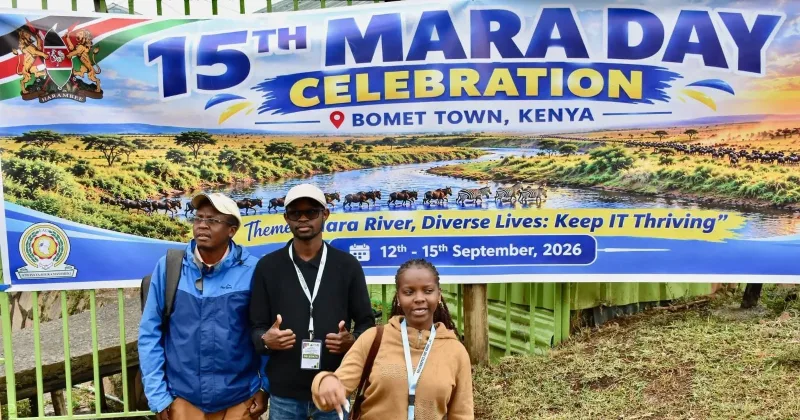
BOMET, Kenya Sep 15 – Lake Victoria Basin Commission (LVBC) Executive Secretary Dr Masinde Bwire has called for urgent and sustained action to protect the Mara River, warning that annual conservation celebrations must translate into practical measures.
Speaking during the 15th Mara Day celebrations in Bomet County, Bwire said Kenya and Tanzania must move beyond commitments made during the annual event and implement measures that will secure the future of the transboundary Mara ecosystem.
The celebrations were held under the theme “Mara River, Diverse Lives: Keep It Thriving,” highlighting the river’s role in supporting biodiversity, tourism, agriculture, livestock and communities in both countries.
Bwire said the event had brought together stakeholders with different experiences but a shared responsibility to protect the river and the wider ecosystem.
“Most importantly, we have agreed that the time for action is now to conserve, restore and protect Mara ecosystem for the present and future generations,” he said.
Bwire said the future of the Mara River will depend on decisions and investments being made today, urging stakeholders to prioritise conservation, climate resilience, scientific research, community livelihoods and capacity building.
He called for investments that deliver measurable and sustainable results rather than short-term interventions.
“As we look to the future, however, we must increasingly prioritize investments that deliver lasting, measurable and sustainable results,” Bwire said.
The Mara River originates in Kenya’s Mau Forest Complex, flows through the Maasai Mara and crosses into Tanzania, where it supports the wider Serengeti ecosystem and the annual wildebeest migration.
The river also provides water for households, livestock and farming communities along its course.
Bwire warned that efforts to conserve the river must start with protecting its catchment and restoring degraded ecosystems.
He urged stakeholders to strengthen measures against pollution and unsustainable land-use practices while promoting climate-smart approaches and empowering communities living within the basin.
“If we protect its catchment, restore degradation of the ecosystems, safeguard waters, manage waters, reduce pollution, promote climate smart actions, empower communities and the Mara can continue to support life, biodiversity and lives for the generation to come,” he said.
He further stressed the need for communities to be placed at the centre of conservation efforts, particularly by supporting livelihoods that are compatible with environmental protection.
Bwire called for stronger cooperation between Kenya and Tanzania in managing the shared river basin, noting that activities upstream can have direct consequences downstream.
He said the commitments made by governments, conservation organisations, researchers and communities during Mara Day should be implemented long after the celebrations end.
“Let our policies translate into action. Let our partnership translate into results,” he said.
The Mara Day platform seeks to promote awareness and sustainable management of the Mara River Basin while strengthening cross-border cooperation between Kenya and Tanzania.
Bwire urged stakeholders to ensure this year’s theme becomes more than a slogan, calling for it to serve as a lasting commitment to protect the river and the generations that depend on it.
“Let it become a covenant for action and ultimately a covenant with future generations,” he said.
He said protecting the Mara River ultimately means protecting the people, wildlife and economies that depend on the ecosystem.
“When we conserve the Mara, we are not simply protecting a river, we are protecting life.”