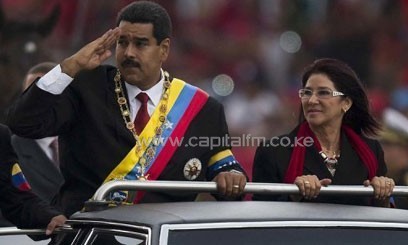
CARACAS, Oct. 26 (Xinhua) — Venezuelan President Nicolas Maduro on Thursday presented the agreement with the opposition signed last week in Barbados for ratification by different sectors of the society, expressing confidence that U.S. sanctions can be lifted in a “total and permanent” way.
“With national unity and this national conference, we have to consolidate the complete, total, and permanent lifting in time of all sanctions and unilateral coercive measures,” he stressed during the National Conference for Dialogue, Peace, and Coexistence in the state of Miranda.
In the meeting, Maduro thanked opposition leaders and businesspeople for their stance on reaching an agreement and assured them that “our hands are open” for dialogue, respect, and the search for consensus.
“The agreement we just signed in Barbados and the agreement we sign in this national peace conference should give us 20, 30, 40 years for the development of democracy, the recovery of the economy, the construction of a new economic model, and national prosperity,” he said.
The Barbados agreement establishes four main points: the demand for the lifting of sanctions; defending the “historical, political and legal rights” of Venezuela over the Essequibo territory; the care of peace and democratic institutions, and the rejection of threats that put the Barbados agreement at risk.