NAIROBI, Kenya, Aug 23 – The Media Council of Kenya says efforts by the Media sector in Kenya to organise a joint tallying of presidential election results started too late in the day and could not materialise before the August 9 General Election.
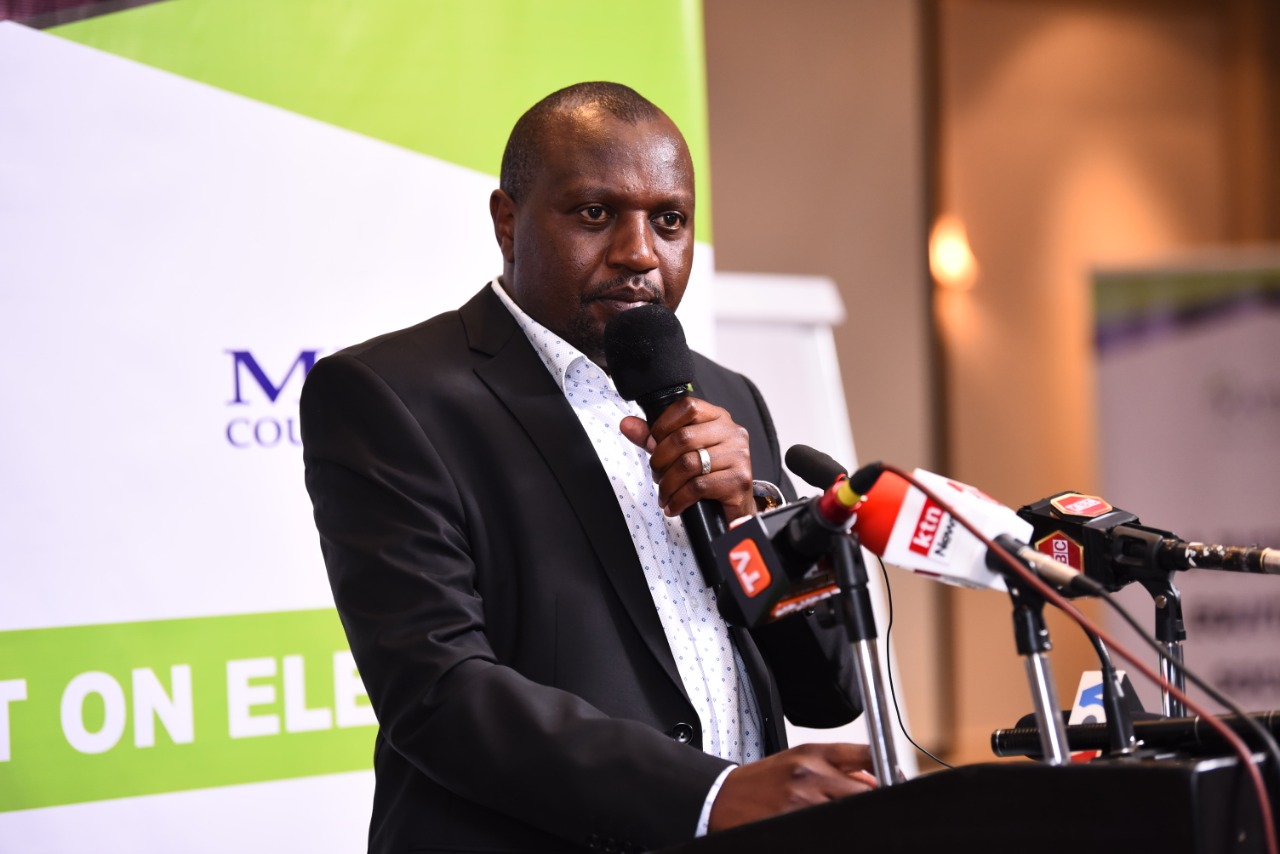
In a report, Chief Executive Officer David Omwoyo stated that while MCK, Media Owners and Editors Guild, agreed in principle that a joint approach and synchronisation of the process across the media, akin to the joint production approach used in the Presidential Debates would be the best solution, the discussions started too late in the day when individual media houses had already deployed in-house plans.
The preliminary report dubbed ‘Hits and Misses: Media Performance and Press Freedom Violations Pre, During and Post the August 9 General Election in Kenya’ stated that while the media houses largely relied on the Independent Electoral and Boundaries Commission (IEBC) portal to get the results which were displayed on their screens, different methodologies applied, and varying sizes of human capacity saw different media houses displaying different results at the same time.
“All the results displayed by media houses were accurate and only sourced from the IEBC portal. However, because different media houses started counting at different times, others counted in descending order, others in alphabetical order, while some media houses employed more personnel than others and results displayed at any one time were not the same,” Omwoyo stated.
While efforts had been made to deploy media personnel countrywide, the sudden availability of the IEBC forms 34A on the portal was unprecedented and caught many newsrooms flatfooted.
The decision to suspend display of the results was made by media stakeholders when they felt that the numbers displayed by different media houses were bringing unnecessary anxiety and was not occasioned by external pressure.
Overall, the Media Council of Kenya commended the media for the professional and responsible coverage of the 2022 General Election.
The Council noted that media preparedness and coverage of the polls was satisfactory compared to the previous elections.
In the run up to the polls, the Council trained over 3,500 journalists and media workers on elections coverage, reporting on opinion polls and ethical principles.
This was in addition to the accreditation of over 11,000 local and international journalists and media practitioners to cover the elections across the country.
Sadly, several cases of press freedom violations including profiling of journalists and media outlets, online trolling of journalists and media outlets and in some cases physical attacks on journalists were reported.
At least 43 journalists from various media houses were affected by various forms of harassment in 12 incidences documented by the Council.
MCK urges the police to expedite investigations and bring the culprits to justice.
Additionally, the Council observed gaps in logistical and social support for journalists especially at the counties by their employers, a situation that hampered effective news gathering.
The Council set up eight media centres countrywide where it provided media workers with a conducive working environment, technical and logistics assistance.
With regards to information integrity, the Council notes the spread of misinformation and propaganda during the elections and beyond especially on digital platforms.
Enhanced coordination among media houses in future will see better relay of information on matters of public importance especially those not exclusively available to individual media houses.