NAIROBI,Kenya Sep 21- The Kilifi County Government is set to dispose of 443 unclaimed Shakahola remains by December, with relatives of victims being urged to come forward and identify their loved ones before the legal deadlines for interment lapse.
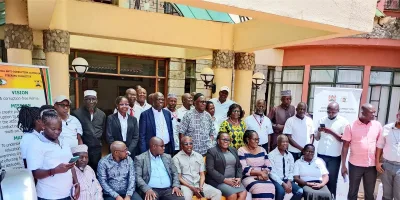
The development unfolded during a joint oversight visit to Malindi Sub-County Hospital by the Senate County Public Investments and Special Funds Committee and the Health Committee, where senators raised concerns over the prolonged stay of the remains at the facility and the effectiveness of efforts to trace families.
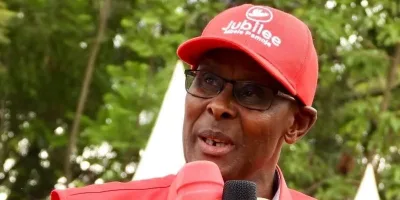
Kilifi County Executive Committee Member for Health Peter Mwarogo said the Directorate of Criminal Investigations had completed its investigations on the remains and given the county the go-ahead to begin the process of interment.
“DCI has completed its investigations and has given us the go-ahead to start the interment process,” Mwarogo said.
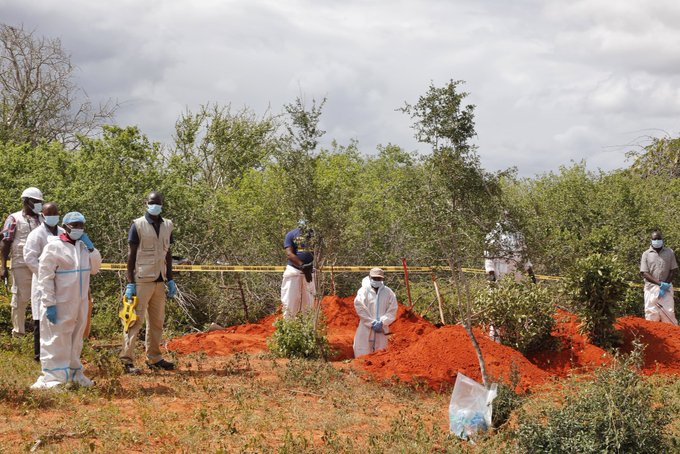
He said the county was holding 443 bodies and remains that had been preserved at the county facility, with the remains including complete bodies as well as body parts recovered during the exhumation exercise.
Mwarogo said the county was keen to ensure that the remains were interred in a manner that would allow for future identification should relatives later come forward.
“We have to inter them in a way that if somebody comes later and wants to identify their relative, we are able to do that,” he said.
The CEC said 14 bodies had so far been identified by relatives, but hundreds remained unclaimed.
He said the county had already identified land near Shakahola where the remains would eventually be interred.
The process, however, will first have to go through the legal requirements governing the disposal of unclaimed bodies.
Mwarogo said a Gazette notice would give families 21 days to come forward and claim the remains. After the expiry of the notice, the county would approach the court for orders allowing it to proceed with the interment.
“We have given a Gazette notice, and the notice gives 21 days. After the 21 days, we will go to court to seek orders to dispose of the bodies,” he said.
He said the county was working closely with the DCI to ensure that the process did not compromise ongoing identification efforts.
The county is also expected to publicise the notice through television, newspapers, radio and social media to reach families who may still be searching for relatives missing since the Shakahola tragedy.
Senators questioned whether a Gazette notice alone would be sufficient to reach families who may not regularly access government publications.
“Nobody reads the Gazette notice, what measures are you employing to ensure families still looking for their loved ones are aptly able to do so?” asked Elgeyo Marakwet Senator William Kisang.
Nominated Senator Fatuma Shakila similarly called for a wider public information campaign.
“Nobody reads newspapers nowadays you need to have a robust way of informing the public that the bodies are going to be interred once the Gazette notice timeline has lapsed,” Ms Shakila noted.
The concerns come as the prolonged preservation of the remains continues to put pressure on mortuary facilities and county resources.
Mwarogo said the county had faced significant pressure on its mortuary facilities because of the large number of remains linked to the Shakahola investigations.
He explained that some of the remains were no longer complete by the time they were recovered.
“Some of them are full bodies, but others are body parts because by the time they were exhumed, some had been eaten by animals,” he said.
The county has previously had to expand its mortuary capacity following the arrival of hundreds of remains from the Shakahola investigations.
The Senate has also previously raised concerns over the number of bodies occupying mortuary space in Malindi. In a 2025 Senate record, lawmakers noted that about 400 Shakahola bodies were still being held at the facility, putting pressure on mortuary services and increasing electricity costs because of the need to keep refrigerated containers operating.
The scale of the tragedy has also complicated efforts to establish the identities of victims.
The Senate’s 2023 Ad Hoc Committee on Shakahola recorded that 428 bodies had been exhumed and recovered by October 13, 2023, while one suspect had died in custody, bringing the committee’s recorded death toll to 429. The committee warned that the figure could rise with further exhumations.
Subsequent investigations have also extended beyond the original Shakahola forest site, with prosecutors pursuing cases linked to deaths at Kwa Binzaro in Kilifi. Court proceedings in 2026 have heard evidence about additional graves and alleged deaths linked to followers of Paul Mackenzie.
The issue of the unclaimed remains has remained a major concern for Kilifi authorities. In August, Governor Gideon Mung’aro publicly complained about the continued storage of hundreds of Shakahola bodies at Malindi Sub-County Hospital and the costs associated with preserving them.
Mwarogo said the county’s immediate priority was to ensure that every reasonable effort was made to reach families before the legal process proceeded.
He said the publicity campaign would therefore be critical in ensuring that relatives who had not yet completed the identification process were given an opportunity to come forward.
The county is now preparing for the next stage of the process, with officials expected to proceed to court after the 21-day Gazette notice period expires.
Mwarogo said the ultimate objective was to give the remains a dignified burial while preserving the possibility of identification should relatives emerge in future.
The Shakahola investigation began in 2023 after reports of deaths and missing persons linked to the Good News International Church led by Paul Nthenge Mackenzie triggered a major police operation in the forest.
The Senate’s 2023 inquiry established that 428 bodies had been exhumed by October 13, 2023, with the committee warning that the number could rise as the search continued. The inquiry examined the circumstances surrounding the deaths, the activities of Mackenzie and his followers, and the role of government officials and security agencies.
The criminal proceedings have since expanded into several cases.
In the main murder trial, the High Court in Mombasa in April 2026 ruled that Mackenzie and 30 co-accused had a case to answer over 191 counts of murder. The prosecution had called 121 witnesses and presented postmortem reports, government analyst findings and other evidence before the case proceeded to the defence stage.
One of the accused, Enos Amanya, pleaded guilty in January 2026 to 191 counts of murder and was convicted on his own plea. The prosecution had called more than 120 witnesses and produced more than 500 exhibits in the case.
A separate manslaughter case also relates to the Shakahola deaths. In February, the prosecution closed its case after calling 95 witnesses in proceedings involving Mackenzie and 94 others who faced hundreds of manslaughter counts.
Investigators told the court that they had relied on forensic evidence, DNA testing, mapping and witness statements to establish what happened in the forest.
The investigations have also extended beyond the original Shakahola graves.
In 2025, additional graves and human remains were discovered at Kwa Binzaro, about 30 kilometres from the original Shakahola site. In 2026, prosecutors charged Mackenzie and other suspects in connection with deaths reported there, with the State alleging that followers of the same religious movement had continued living under extreme doctrines after the original Shakahola operation.
A High Court inspection of Mackenzie’s former homestead and parts of Shakahola Forest in June 2026 also formed part of proceedings examining alleged links between the original deaths and later fatalities at Kwa Binzaro.
The investigations have included efforts to establish the identities and causes of death of the victims.
The Senate’s earlier inquiry noted that DNA matching was a critical component of the identification process, while families had faced difficulties travelling to Kilifi and navigating the process of providing samples and identifying their relatives.