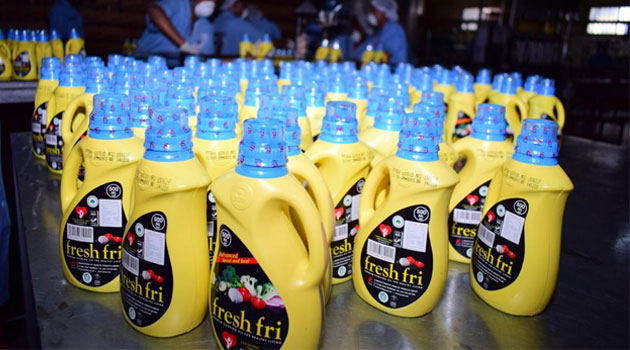
NAIROBI, Kenya, June 6 -Pwani oil, the manufacturer behind the Salit Oil, Mpishi Poa, and Fresh Fry cooking oil products has announced the temporary halt of its operations citing among others the dollar shortage witnessed in the country which has taken a toll on several manufacturers.
This comes barely a week after the Kenya Association of Manufacturers warned that the ongoing dollar shortage in the country poses a serious threat to the sector members who rely on dollars to import key raw materials and inputs for processing and capital goods for investment.
The crisis, KAM warned is affecting the relationship of manufacturers with suppliers and risks destroying Kenya’s reputation as an open market.
In a statement, Rajul Malde, the commercial director of Pwani oil confirmed that the firm has faced challenges in accessing dollars used in paying for imports of crucial materials.
“Given the prevailing challenges, Pwani Oil has temporarily halted operations at it’s refinery in Kilifi as we work to resolve the problem .We however wish to assure our customers, employees , suppliers, partners and other stakeholders that this is a temporary measure and that the business remains in operation and our products available in retail outlets,” Malde said.
The issue, Pwani oil said was also compounded by the Ukraine-Russia war which has affected global supply chains.
In addition, the firm blamed the palm oil shortage which was occasioned by suspension of exports from key producers.
Indonesia, the world’s biggest palm oil exporter halted shipments of edible oil in April, a move aimed at flooding the domestic market with supplies to control the soaring prices of cooking oil.
“Manufacturers here in Kenya have not been spared the aftershocks of this unprecedented disruption, coming in the wake of the prolonged Covid – 19 crisis,” the manufacturer noted.
Regarding the US dollar shortage, KAM Chairperson Mucai Kunyiha had raised concerns that most of its members are accessing the exchange rate at Sh 120 above the formally quoted exchange rate of around Shs115-116.
“The real market price ( as evidenced in our purchases ) is now above Shs120 and it is our belief that the differential is contributing to the shortage. Exporters and other entities holding USD are reluctant to sell the dollar at lower prices as it is clear and visible to them what the market value of the currency is,” Kunyiha said.
But in a rejoinder, Central Bank Governor Patrick Njoroge refuted the claims saying that Kenya has adequate dollars to meet demand from importers and corporates.
“The [forex] market generates and distributes something like USD2 billion every month. So if you have somebody or a sector which is importing USD 90 million or USD 100 million, I think that’s nowhere near the USD 2 billion that we are putting out there,” the CBK boss said.
“They should understand that they are small in that sense and sort of go to the market like everyone else. There are no favorites in the market. Follow the rules of the market and everything will be okay.”
KAM has therefore urged the Central Bank of Kenya to institute a policy that will return the market to predictability and, crucially , to supplies of currency as and when needed in order to restore confidence in the market