
By Dr Kibet Shikuku, Medical Director, The Nairobi West Hospital
NAIROBI, Kenya, April 10 – On World Health Day 2026, the global message is both timely and urgent: Together for health. Stand with science. It is a call to anchor healthcare systems in evidence, innovation and collaboration — while never losing sight of the people they serve.
Kenya’s healthcare landscape is increasingly reflecting this balance.
Across the country, the Ministry of Health has accelerated reforms aimed at strengthening Universal Health Coverage (UHC), expanding digital health infrastructure, and promoting data-driven decision-making. From the rollout of electronic medical records in county facilities to the integration of telemedicine in underserved regions, science is no longer a distant ideal — it is becoming part of everyday care.
Counties are also playing a pivotal role. In regions such as Makueni and Kisumu, digital health platforms are improving patient tracking and continuity of care, while community health programmes are leveraging data to better manage chronic diseases. These initiatives demonstrate a growing national commitment: that innovation must reach beyond major cities and into communities where it is needed most.
At the national level, referral institutions such as Kenyatta National Hospital continue to set the pace in adopting advanced medical technologies. From specialised diagnostic imaging and oncology services to research-led care models, the hospital exemplifies how public institutions are embracing science to improve outcomes at scale. Its investments in modern laboratory systems and digital workflows underscore a broader shift towards precision medicine in Kenya.
Yet even as large institutions drive innovation, the real transformation of healthcare lies in how widely — and how meaningfully — these advances are applied.
This is where private sector providers, including The Nairobi West Hospital, play a complementary role.
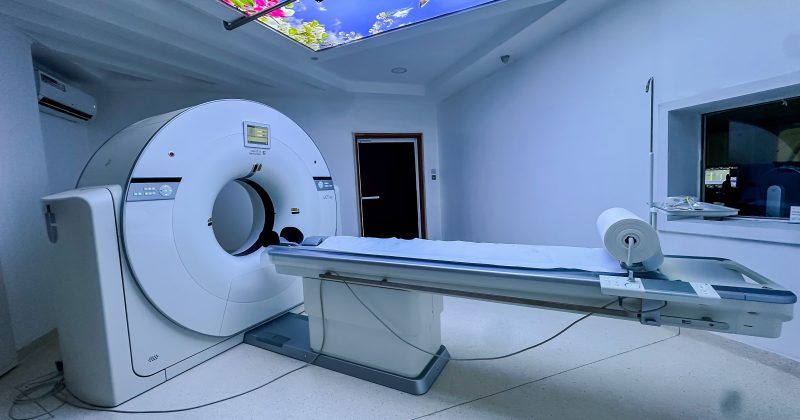
Modern healthcare is increasingly powered by intelligent systems. At Nairobi West Hospital, AI-enabled technologies are being integrated into clinical workflows to support diagnostics, streamline operations and enhance patient outcomes. From radiological imaging supported by machine learning algorithms to laboratory systems that improve accuracy and turnaround times, these tools are helping clinicians make faster, more informed decisions.
But the hospital’s approach is deliberate: technology is not an end in itself.
Instead, it is part of a broader philosophy that combines science with a human touch. Every diagnostic tool, every digital system, and every clinical protocol is designed to support evidence-based medicine while preserving the personal connection between caregiver and patient.
This balance is especially critical in an era where healthcare is becoming more complex.
Artificial intelligence, predictive analytics and digital health records are reshaping how care is delivered. They enable earlier detection of disease, more personalised treatment plans, and improved coordination across different levels of care. In Kenya, their adoption is steadily expanding — supported by both government policy and institutional investment.
However, the success of these technologies depends not just on their availability, but on how they are used.
Healthcare remains, at its core, a human experience. Patients seek not only accurate diagnoses, but also reassurance, understanding and trust. As science advances, the role of empathy becomes even more important — ensuring that innovation enhances, rather than replaces, the human elements of care.
The World Health Organization’s emphasis on “standing with science” also speaks to the importance of public trust. In an age of abundant information, healthcare providers must communicate clearly and act transparently, grounding their decisions in evidence while remaining responsive to patient needs.
Kenya’s progress offers a compelling example of what is possible when science, policy and care align. From county-level digital health initiatives to national referral hospitals and private institutions embracing AI, the country is building a healthcare system that is both modern and inclusive.
Within this broader ecosystem, The Nairobi West Hospital continues to contribute by integrating advanced technologies into patient-centred care — demonstrating that innovation and compassion are not competing priorities, but complementary ones.
Because the future of healthcare will not be defined by technology alone.
It will be defined by how well we use science to serve people.