NAIROBI, Kenya, Aug 25 — Africa’s bioeconomy is being held back less by a shortage of scientific ideas than by the failure to turn research into businesses capable of attracting investment, British High Commissioner to Kenya Matt Baugh said Tuesday.
Baugh said African countries had growing research and innovation capabilities but lacked the financing pipelines, industry links and institutional systems needed to move promising discoveries from laboratories into commercial products and jobs.
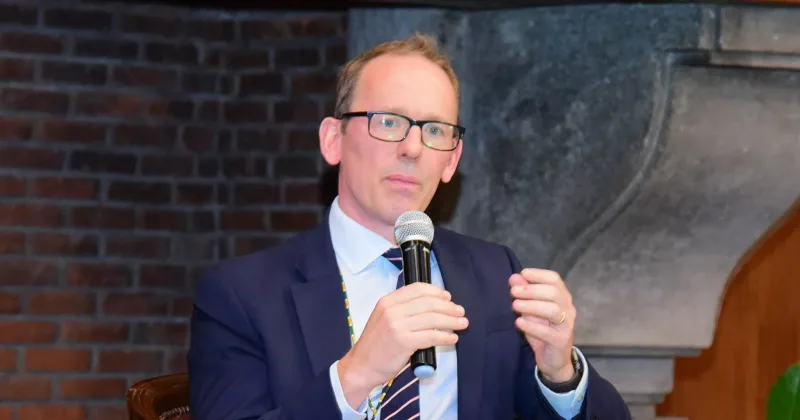
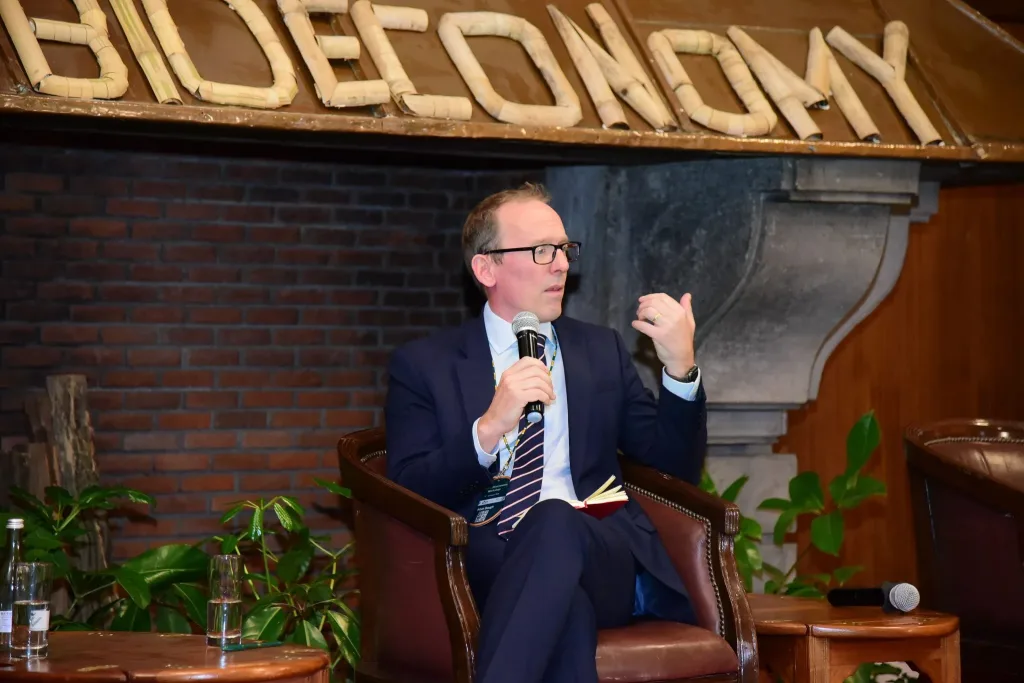
“The binding constraint that we flagged is basically getting research to an investable proposition,” Baugh said at the Africa Bioeconomy Workshop in Nairobi.
The two-day meeting brings together policymakers, scientists, investors, entrepreneurs and development partners to explore ways of accelerating the commercialisation of Africa’s biological resources and scientific capabilities.
Baugh said the bioeconomy offered significant opportunities for economic growth, but countries needed to deliberately connect universities and research institutions with government, investors and industry.
The push comes as Kenya and other African countries seek to use biological resources, biotechnology and scientific research to drive industrialisation, create jobs and reduce reliance on exports of raw materials.
He noted that the UK’s experience demonstrated the economic potential of connecting research with investment and industry.
The UK bioeconomy contributes about £200 billion in gross value added and supports around five million jobs, he said.
For Africa to unlock a greater share of its own potential, Baugh said governments needed to build ecosystems that bring together researchers, companies, investors and incubators.
“It’s about both attracting and unlocking capital now and how funds and investment vehicles can either provide seed investments to basically then attract follow-on,” he said.
Investment pipeline
The UK is supporting that effort in Kenya through initiatives including Forge Africa, an investment facility being developed with Kenya’s Green Investment Fund to help promising businesses become investment-ready and attract further private capital.
Baugh said the facility was intended to help build a pipeline of Kenyan businesses capable of driving future economic growth.
He said the approach reflected a broader shift in the UK’s engagement with Africa from traditional development assistance towards partnerships designed to mobilise investment and build commercially sustainable enterprises.
The UK has also partnered with Kenya’s State Department for Science, Research and Innovation to map the country’s bioscience and bioeconomy sectors, giving policymakers a clearer picture of existing capabilities and potential investment opportunities.
But Baugh pointed out that mapping the sector would not by itself generate economic value unless institutions were able to move discoveries through commercialisation.
“What we’ve learned from a kind of UK perspective is that you need to be really, really quite deliberate,” Baugh said, calling for a “systemic and systematic” approach to building the bioeconomy ecosystem.
That means bringing government, academia, industry and investors together rather than allowing them to operate in isolation.
He cited the decades-long partnership between the Wellcome Trust and the Kenya Medical Research Institute as an example of how sustained international collaboration can strengthen research capacity and build globally competitive institutions.
Barriers to innovation
Baugh also called on governments to remove barriers that prevent promising businesses from developing and scaling.
He said African countries needed to cut unnecessary bureaucracy, create appropriate investment incentives, provide seed financing where necessary and establish regulatory systems that protect consumers without unnecessarily restricting innovation.
Regulators, he said, should “enable, not disable innovation” while maintaining standards that allow products to reach domestic and international markets.
He said the ecosystem would also require entrepreneurs willing to take risks, investors prepared to back emerging technologies and research institutions capable of working closely with industry.
Baugh said Africa should avoid treating the bioeconomy as a collection of isolated national projects.
Regional cooperation could help countries combine research capabilities, production capacity, markets and investment while creating larger value chains for bio-based products.
Kenya and the East African Community are already pursuing regional approaches to the sector, providing a platform for deeper cooperation.
The British envoy cautioned, however, that national or regional strategies would have little impact without institutions capable of implementing them.
“Strategies alone don’t deliver change,” he said.
“Success also depends on the strategy, system [and] institutional framework that takes that strategy and turns it into action.”
Development partners, he said, could support that process by bringing capital, technical expertise, research partnerships and access to international markets.