
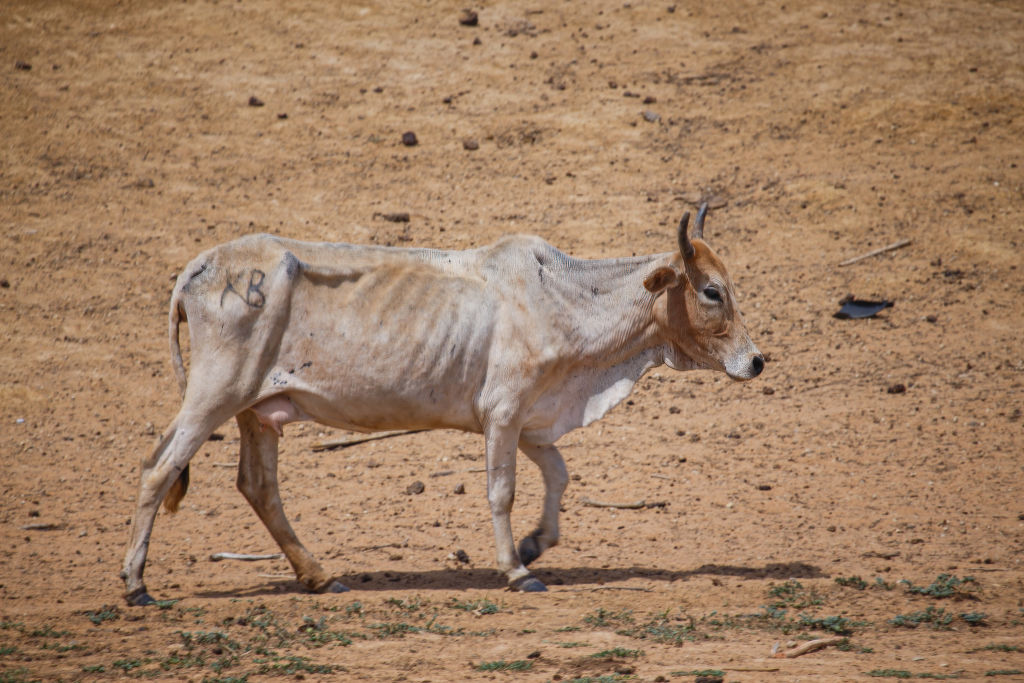
NAIROBI, Kenya, Feb 28 – 2.8 million people will be faced with acute food insecurity between April and June due to below-normal March–May rainfall.
According to the National Drought Management Authority (NDMA), counties in need of urgent humanitarian assistance include Turkana, Mandera, Garissa, Wajir, and Marsabit.
Others are marginal agricultural zones like Kilifi, Kwale, Meru North, and Makueni.
The deteriorating outlook has also been linked to the fragile recovery from the 2021–2023 drought, which had five consecutive failed seasons.
Increased vulnerability of ecosystems and livelihoods to further shocks is also to blame.
“A projection analysis was also conducted, and it is observed that the number of people who will require urgent humanitarian assistance will increase from the current 2.15 million (February 2025) to about 2.8 million for the period between April – June 2025,” stated NDMA.
“The deteriorating outlook is linked to expected below-normal rainfall in the March-May 2025 season, marking the second consecutive poor season and the fragile recovery from the 2021–2023 drought, which had five consecutive failed seasons,” it added
NDMA noted that poor rainy seasons increase the vulnerability of ecosystems and the livelihoods of people in the affected counties.
According to NDMA ,the 2024 short rains season performed below average across all livelihood zones in the 23 Arid and Semi Arid Land (ASAL) counties.
This resulted in a worsening food security situation, with a significant increase in the food-insecure population across the ASAL region.