NAIROBI, Kenya, Feb 13-Four counties in the Mt. Kenya region including Nyeri, Kirinyanga, Laikipia and Nyandarua have been selected to pilot Kenya’s maiden strategy of completely eliminating Malaria in the next few years.
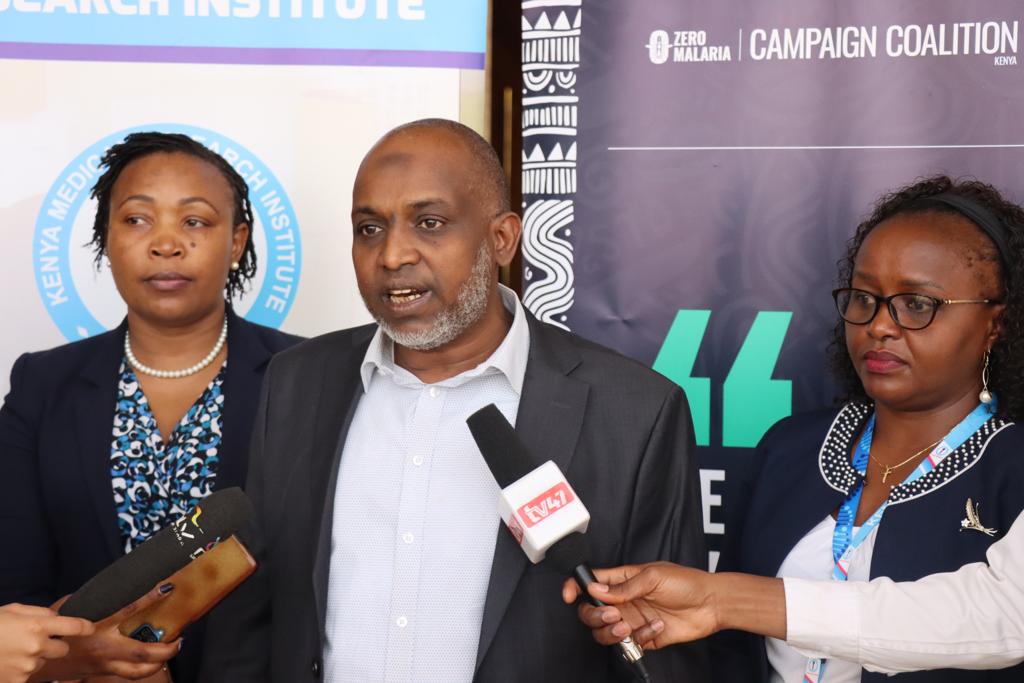
Kenya’s Head Division of National Malaria Program Dr. Ahmed Deen Omar on Monday said the four counties selected have the least malaria infections of below one per cent, even as the national Malaria prevalence stands at 6 per cent.
Dr. Omar however explained that the choice of the four is a world practice where areas targeted for elimination must present low transmission in order to clear parasites and vectors that cause Malaria.
“In these four counties we have put up structures for elimination, we have made up a baseline survey to see where the transmissions are as well as community level surveillance so that any positive case reported is followed such that we are able to interrupt the transmission from that area,” Dr. Omar stated.
Dr. Omar said successful elimination of malaria in the four counties will help inform the country’s surveillance efforts to control malaria in endemic areas of Nyanza, Western Kenya and the Coastal region.
According to Dr. Omar, Malaria prevalence in the eight lake endemic counties of Kisumu, Siaya, Migori, Homa Bay, Busia,Bungoma, Kakamega and Vihiga is at 19 per cent.
In the Coast it is at 5 per cent, Northern and Eastern Region it is about 2 to 3 per cent.
“The lessons we learn from the four counties can be used in other parts of the country to ensure we reduce malaria and achieve a malaria free Kenya in the next few years,” he added.
This comes even as the Ministry on Wednesday and Thursday is set to hold the fourth Kenya National Malaria Forum (KNMF) which is part of Malaria Programme Review which will bring together experts and stakeholders involved in malaria control, and to address specific needs relevant to contributing new knowledge from research and lessons learnt from implementing different malaria control interventions.
“The forum will provide an opportunity for researchers, policy makers, and practitioners involved in malaria control to interact and share evidence to inform policy and practice,” Dr Omar noted.
Nearly 600 participants are expected to take part in the forum.
Despite Kenya having made huge strides in the fight against Malaria the disease still poses a burden in the country’s health system as it remains a primary disease.
Last year the Ministry of Health reported that the burden of malaria had reducedby 50 per cent from a prevalence rate of 11 per cent in 2010 to 6 per cent in 2020.
This was attributed to concerted and sustainedeffort and collaboration between the Ministry of Health, theCounty governments, local communities, developmentpartners in health and the global malaria community.
As part of measures of controlling the disease various interventions have been put in place including providing Intermittent Preventive Treatment formalaria for pregnant women in malaria endemic areas.
In 2021 the Ministry of Health also launched a mass net distribution campaign in 27 Counties with the highest burden of Malaria.
In Kenya, there are an estimated 3.5 million new clinical cases and 10,700 deaths each year, and those living in western Kenya have an especially high risk of malaria.