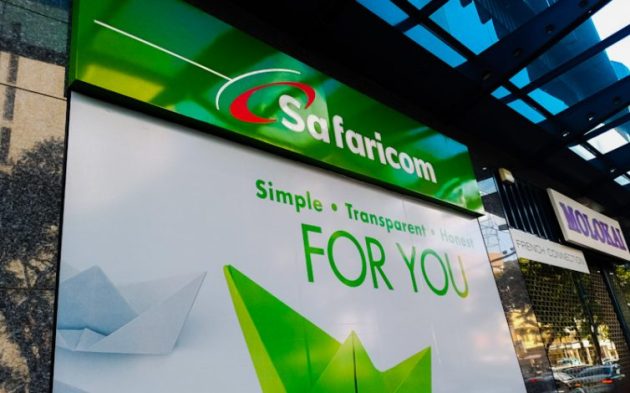
NAIROBI, Kenya, Jan 20 — The Consumer Federation of Kenya (COFEK) has petitioned the National Assembly to halt the government’s proposed sale of a 15 per cent stake in Safaricom PLC, warning that the transaction risks handing over “systemic financial infrastructure” to foreign control without adequate public scrutiny.
In a submission presented on Tuesday to the Departmental Committee on Finance and National Planning, the consumer watchdog argued that the sale — valued at approximately Sh244.5 billion — is not merely a fiscal adjustment but a constitutional violation that threatens Kenya’s economic sovereignty.
COFEK Secretary General Stephen Mutoro told legislators that Safaricom’s dominance in the mobile money sector through M-Pesa effectively makes it a critical national asset, rendering its partial privatisation a matter of national security rather than standard commercial practice.
The Treasury, acting through Sessional Paper No. 3 of 2025, is seeking parliamentary approval to divest 6.01 billion shares to Vodafone Kenya — a subsidiary of South Africa’s Vodacom Group — at Sh34 per share.
The move would reduce the state’s shareholding from the strategic 35 per cent held since the 2008 IPO to a minority 20 per cent, effectively consolidating majority control — 55 per cent — under Vodacom.
‘Opacity’
COFEK’s objection centres on what it termed the “opacity and foreign preference” of the deal.
The federation questioned why the shares were structured as a block sale to an existing foreign strategic partner rather than being offered to Kenyan retail investors, cooperatives or pension funds.
It argued that the structure contradicts the “legitimate expectation” that strategic national assets should remain substantially domestically owned.
“Safaricom is a Kenyan success. Let us not export our few successes for a song when we can easily retain them,” the federation said in its submission.
The petition also raised alarm over the valuation, citing what it called the “Ethiopia factor”.
With Safaricom Ethiopia currently in a capital-intensive growth phase, COFEK argued that the government is selling at a discount, effectively socialising the risks while denying Kenyan taxpayers the future upside once the subsidiary turns profitable.
The committee has received conflicting views on the proposed sale.
Appearing before a joint committee on Monday, Jan 19, 2026, Safaricom CEO Peter Ndegwa defended the transaction as a “shareholder realignment” that would not alter the company’s governance, identity or regulatory oversight.
‘Asset stripping’
Ndegwa said Safaricom would remain a Kenyan company subject to the Central Bank of Kenya and the Communications Authority, dismissing fears of “state capture” by foreign entities.
The Kenya Bankers Association (KBA), however, proposed a compromise. In its submission, the lobby group suggested that 300.4 million shares be reserved for Kenyan investors, with the remaining 5.7 billion allocated to Vodacom.
The KBA said the model would deepen capital markets and broaden local ownership, addressing civil society concerns over the exclusion of domestic investors.
COFEK also broadened its attack to the Executive’s fiscal management, describing the proposed sale as “asset stripping” intended to finance inefficiency and corruption.
Referencing the “ill-fated Public Finance Bill 2024”, the federation argued that the country is facing a severe trust deficit and accused the Treasury of failing to conduct the mandatory public participation required under Article 10 of the Constitution.
“Public participation is not noise… it is a constitutional requirement,” the submission said, directly rebutting recent remarks by the Treasury Cabinet Secretary.
COFEK’s position echoes arguments previously advanced by the Law Society of Kenya (LSK) and the opposition coalition which have consistently challenged the legality of the 2023 Privatisation Act.
The High Court previously declared sections of the law unconstitutional for bypassing parliamentary oversight, a legal cloud that continues to hang over the planned disposal of state assets including the Kenya Pipeline Company and the Kenyatta International Convention Centre (KICC).
COFEK urged the National Assembly not to act as a “conveyor belt” for Executive decisions and to suspend the transaction pending a forensic audit of the valuation.