Baku, Azerbaijan, Nov 18 – With just days remaining, negotiators at the COP29 climate summit in Baku are striving for breakthroughs on climate finance commitments, which have been the focal point of this year’s conference.
As the talks edge toward a close, UN Secretary-General António Guterres has underscored the importance of immediate, substantial financial contributions to support vulnerable nations.
He warned that without serious action, the global adaptation finance gap could soar to $359 billion per year by 2030—a figure that would have devastating consequences for countries on the front lines of climate change.
In his address, Guterres called on wealthier nations to follow through on past climate commitments, urging them to increase adaptation finance to $40 billion per year by 2025. He emphasized that these funds should be accessible and transparent, ensuring they reach those most in need. “These missing dollars are not abstractions on a balance sheet,” Guterres said, noting that this gap equates to lives lost, harvests destroyed, and development obstructed.
Additionally, Guterres advocated for innovative funding mechanisms that make “polluters pay.” He proposed levies on high-emission industries such as shipping, aviation, and fossil fuel extraction to generate new revenue streams for climate adaptation and resilience efforts.
Kenya’s Environment Cabinet Secretary, Aden Duale, reinforced the call for climate finance by championing Africa’s demand for a $1.3 trillion financing mechanism. Duale highlighted that although Africa contributes minimally to global emissions, it is disproportionately impacted by climate change. He insisted that this financing should be provided as grants, not loans, to support resilience in developing nations without burdening them with debt.
Early Breakthrough on Carbon Market Rules
One of COP29’s early successes has been a consensus on carbon credit standards under Article 6.4 of the Paris Agreement, which enables countries to trade carbon credits. This agreement is seen as a critical tool for helping nations meet their climate targets and channel resources to low-carbon projects. COP29 President Mukhtar Babayev described this as a “game-changing tool,” particularly for supporting developing countries in achieving sustainable development.
Global Leaders to Convene at G20 Summit in Brazil
As COP29 heads into its final days, leaders from many participating nations are set to attend the G20 Summit in Brazil, where climate finance will also take center stage. Simon Stiell, Executive Secretary of the UN Framework Convention on Climate Change (UNFCCC), urged G20 leaders to prioritize climate action, stating that the global climate crisis should top the agenda. He highlighted the G20’s unique role in mobilizing the necessary finance and reforms, saying, “G20 leaders must signal loud and clear that international cooperation is the only chance humanity has to survive global heating.”
Growing Demands for Climate Justice
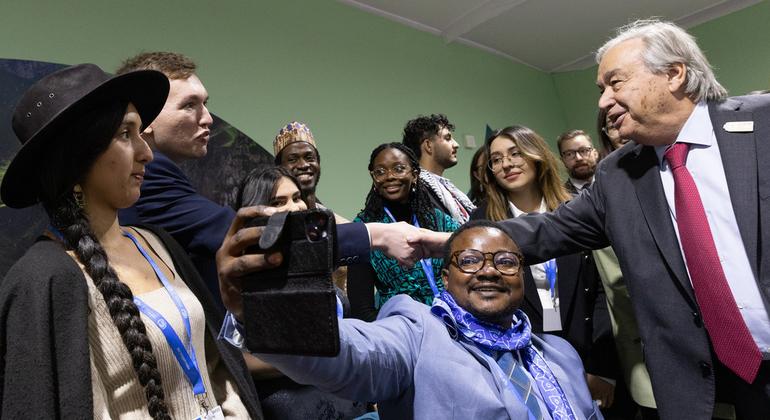
Youth activists and climate advocates have amplified demands for climate justice at COP29, calling for greater accountability and action from governments and corporations alike. UN Secretary-General Guterres expressed solidarity with these calls, acknowledging the anger and frustration of young activists who bear the burdens of a climate crisis they did not cause. “You have every right to be angry. I am angry too,” he said, emphasizing the urgency of concerted action.
With only a few days left, COP29 negotiators face intense pressure to deliver an ambitious financial agreement that not only sets a higher climate finance target but also addresses the immediate needs of communities most vulnerable to climate change impacts. The outcomes of these talks could shape the path toward a resilient, low-carbon future for generations to come.