NAIROBI, Kenya, Apr 4 – Is your child having delayed speech? Not being startled by loud sounds? Not turning toward a sound after he/she’s 6 months old? Not saying single words like “mama” or “dada” by the time he/she’s 1 year old? This could be a case of deafness and hearing loss.
Screening for hearing is not routinely done. As such, hearing impairment goes widely unchecked resulting to more than 200,000 Kenyan children living with a hearing disability with only about 10 percent in school.
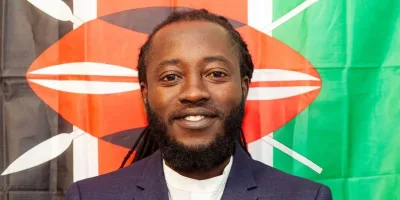
Sudheer Punj’s daughter was born with congenital deafness and was diagnosed at the age of one and fitted with hearing aids.
The symptoms to his daughter’s hearing loss became apparent when he noticed that she was not responsive to audio-logical signals.
No parent wants to believe that their child has a hearing impairment and so Punj’s Father convinced him to do simple tests such as tapping with his keys and discovered that his daughter was not responsive at the age of one.
“When my child was diagnosed with deafness, we were shattered but we were then very quickly reinforced by excellent speech therapists locally here at the time. I encourage people who have children living with hearing impairment; I want to assure you that there is nothing lost. My daughter is now 38 years old and attended normal school. She then went on to graduate as a lawyer and now works with one of the top five law firms in England,” he said.
He attributed her daughter’s achievements to hard work right from the beginning (diagnosis) which had to do with speech therapy and hearing aids.
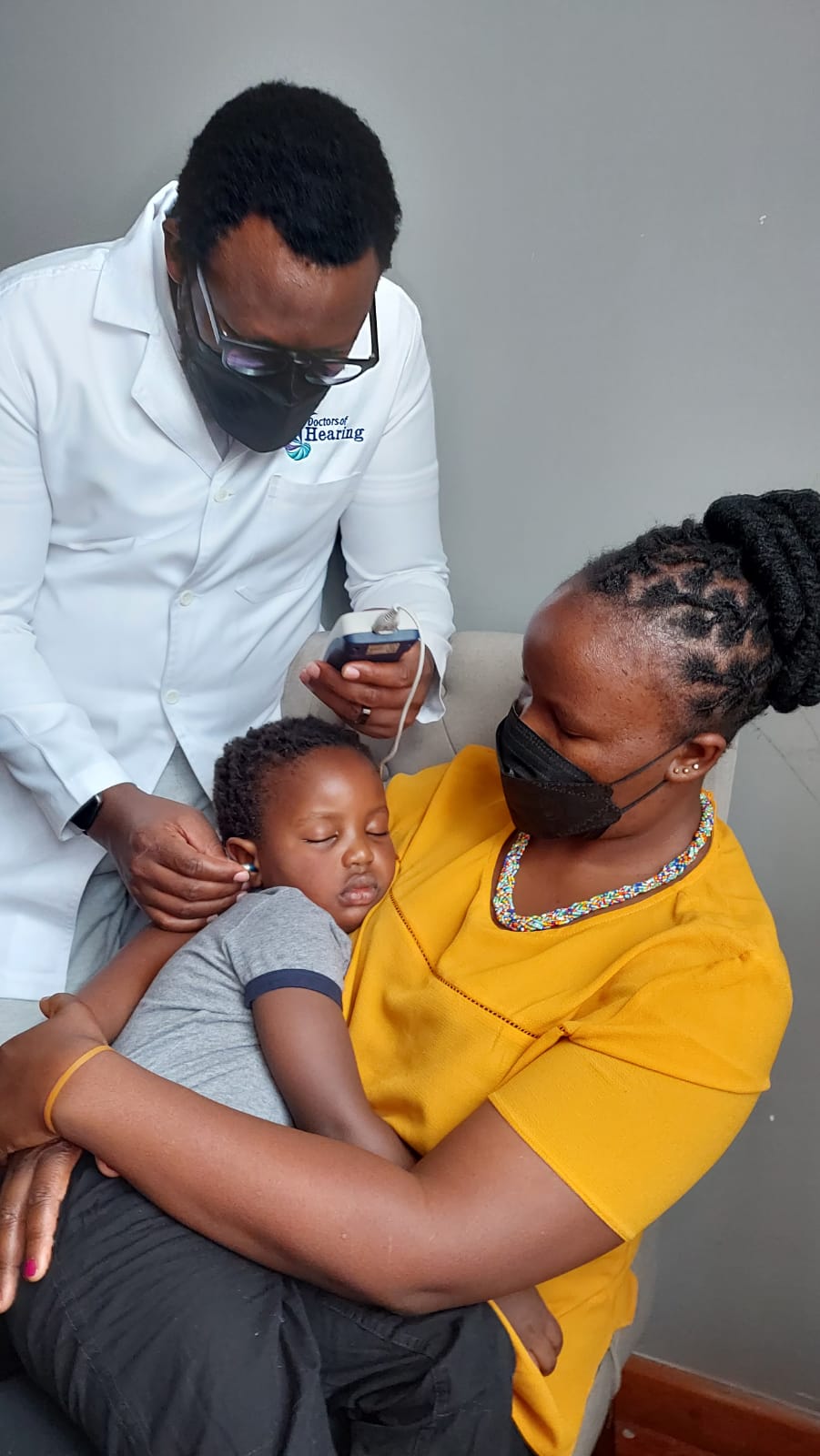
“It is very important that children are offered speech therapy and of course the hearing aids form an important part of the entire therapy,” he said.
The daunting journey motivated Punj to advocate for deaf children, through Arya Samaj, Nairobi a religious institution that provide funding for massive hear impairment screening.
“We want to start a program on training speech therapists to train children with hearing impairment on how to speak as well as acquire the hearing aids,” he stated.
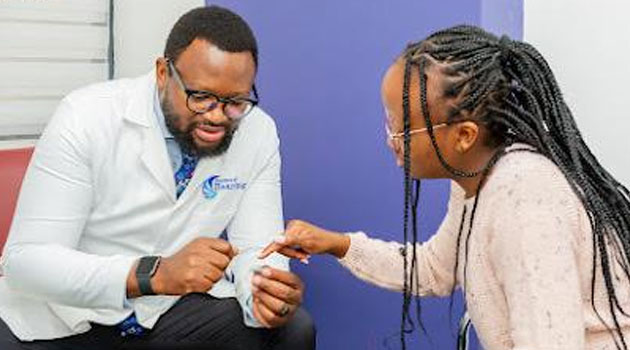
Audiologist, Lead consultant at Doctors of Hearing Richard Mwangi, noted that the impacts of hearing loss are broad and can be profound.
They include a loss of the ability to communicate with others, delayed language development in children, which can lead to social isolation, loneliness and frustration, particularly among older people with hearing loss.
“Many areas lack sufficient accommodations for hearing loss, which effect academic performance and options for employment. Children with hearing loss and deafness in developing countries rarely receive any schooling.
The World health Organization (WHO) estimates that unaddressed hearing loss costs the global economy US$ 980 billion annually due to health sector costs (excluding the cost of hearing devices), costs of educational support, loss of productivity and societal costs.
In an interview with Capital Health, Mwangi stated that there are different levels of hearing impairments and that not everyone with a hearing impairment is deaf.
Hearing loss may be mild, moderate, severe, or profound. It can affect one ear or both ears, and leads to difficulty in hearing conversational speech or loud sounds.
A person who is not able to hear as well as someone with normal hearing – hearing thresholds of 20 dB or better in both ears – is said to have hearing loss.
‘Hard of hearing’ refers to people with hearing loss ranging from mild to severe. People who are hard of hearing usually communicate through spoken language and can benefit from hearing aids, cochlear implants, and other assistive devices as well as captioning.
‘Deaf’ people mostly have profound hearing loss, which implies very little or no hearing. They often use sign language for communication.
“People may mistake that this person can hear by a simple thing such as them reacting to a passing motorcycle, but they are just reacting to vibration,” Mwangi said.
He explained that 90% of the hearing impairment cases are gradual as they start off mild then progress to moderate.
“Whenever you detect hearing loss, seek medical attentions as it will also affect your speech.”
Dr Mwangi affirmed that a child can however lead a normal life as is the case of Punj’s daughter with early intervention.
The Doctors of Hearing leading consultant also lauded government institutions for offering the Higher Diploma in Audiology further boosting the human resource in that field line of deafness and hear loss which can develop later in babies or during childhood or adulthood.
Causes of hearing loss and deafness can be by ailments such as rubella in pregnant women sometimes causing birth defects.
It can be caused by some medications and head trauma as well as be genetic.
The WHO estimates that over 5% of the world’s population – or 430 million people – require rehabilitation to address their ‘disabling’ hearing loss (432 million adults and 34 million children).
It is estimated that by 2050 over 700 million people – or one in every ten people – will have disabling hearing loss.
‘Disabling’ hearing loss refers to hearing loss greater than 35 decibels (dB) in the better hearing ear. Nearly 80% of people with disabling hearing loss live in low- and middle-income countries. The prevalence of hearing loss increases with age, among those older than 60 years; over 25% are affected by disabling hearing loss.