
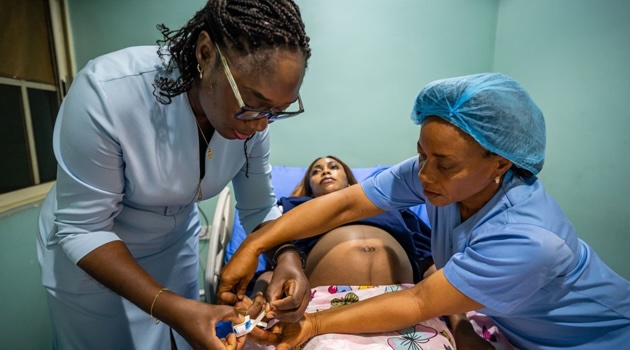
NAIROBI, Kenya Dec 4 – The number of children dying before their fifth birthday is projected to rise for the first time this century, reversing decades of global progress, according to new data in the Gates Foundation’s 2025 Goalkeepers Report released today.
The report shows that 4.6 million children died before age five in 2024, and modelling by the Institute for Health Metrics and Evaluation (IHME) projects that the figure will climb to 4.8 million this year—an increase of more than 200,000. The rise comes as global development assistance for health fell sharply, dropping 26.9% below 2024 levels.
Countries now face mounting debt, fragile health systems and the risk of losing hard-won gains against malaria, HIV and polio.
Titled We Can’t Stop at Almost, the report warns that if current funding cuts continue, up to 16 million more children could die by 2045. It outlines a roadmap of high-impact investments and cost-effective solutions to help prevent a historic reversal in global child survival.
“I wish we were in a position to do more with more, because it’s what the world’s children deserve,” writes Bill Gates, chair of the Gates Foundation. “But even in a time of tight budgets, we can make a big difference… With millions of lives on the line, we have to do more with less, now.”
IHME projections show that persistent funding cuts of 20% could lead to 12 million additional child deaths by 2045; a 30% reduction would raise that toll to 16 million. Gates describes the moment as a global inflection point, warning that a world with unprecedented scientific advances risks failing its youngest citizens because of underfunding.
The report highlights several “best buys” for child survival, including:
- Robust primary health care: For under $100 per person annually, strong systems can prevent up to 90% of child deaths.
- Routine immunisation: Every $1 spent on vaccines delivers $54 in economic and social benefits. Gavi has immunised more than 1.2 billion children since 2000.
It also points to the Global Fund to Fight AIDS, Tuberculosis and Malaria as an example of sustained investment driving transformative results. Since 2002, the Global Fund has saved 70 million lives and cut deaths from the three diseases by over 60%. Its recent Eighth Replenishment secured $11.34 billion from donors.
The report argues that next-generation innovations—such as improved pneumonia and RSV vaccines, new malaria tools and long-acting HIV prevention drugs—could save millions more children by 2045. IHME modelling suggests next-generation pneumonia and RSV vaccines alone could save 3.4 million children, while new malaria technologies could save up to 5.7 million.
The report features testimonies from frontline leaders across Africa and Asia, including Nigerian Governor Muhammad Inuwa Yahaya, Kenyan community health worker Josephine Barasa, Ugandan entomologist Krystal Mwesiga Birungi and Indian paediatrician Dr Naveen Thacker, all of whom stress the importance of local leadership and sustained investment.
Gates calls on governments, philanthropies and citizens to safeguard or expand funding for children’s health and to prioritise proven, high-impact solutions.
“We can’t stop at almost,” he writes. “If we do more with less now—and eventually return to a world with more resources devoted to children’s health—we can change the story for millions of children in the decades ahead.”