

NEW YORK, September 21 — Leaders from Africa, Asia and Europe working to make artificial intelligence more inclusive and accessible have been recognised as 2026 Goalkeepers Champions at the annual Goalkeepers event in New York.
The champions were recognised for work spanning agriculture, technology, digital rights, education, public services and economic development, with this year’s cohort focused on how AI can expand opportunity rather than deepen existing inequalities.
The Goalkeepers initiative, held annually by the Gates Foundation, highlights leaders contributing to the United Nations Sustainable Development Goals and brings together changemakers working to develop and scale solutions to challenges facing communities around the world.
Martin Blomberg — Sweden, AgTech Founder and Climate Innovator

Swedish entrepreneur Martin Blomberg was recognised for his work using biotechnology and artificial intelligence to reduce livestock emissions while improving outcomes for farmers.
Blomberg is the founder of Root bio, a biotechnology company that combines AI with automated robotics to accelerate biological discovery. The approach is designed to reduce the time required to develop biological solutions from years to weeks.
One of the company’s applications is a feed additive that the organisation says can reduce methane emissions from cattle by between 30 and 50 per cent while improving feed efficiency across different farming systems.
Blomberg is also focused on making biological innovations more accessible to farmers in low-resource settings, working with distributors to integrate products into existing agricultural supply chains.
Prof. Ganesh Ramakrishnan — India, Multilingual AI Pioneer
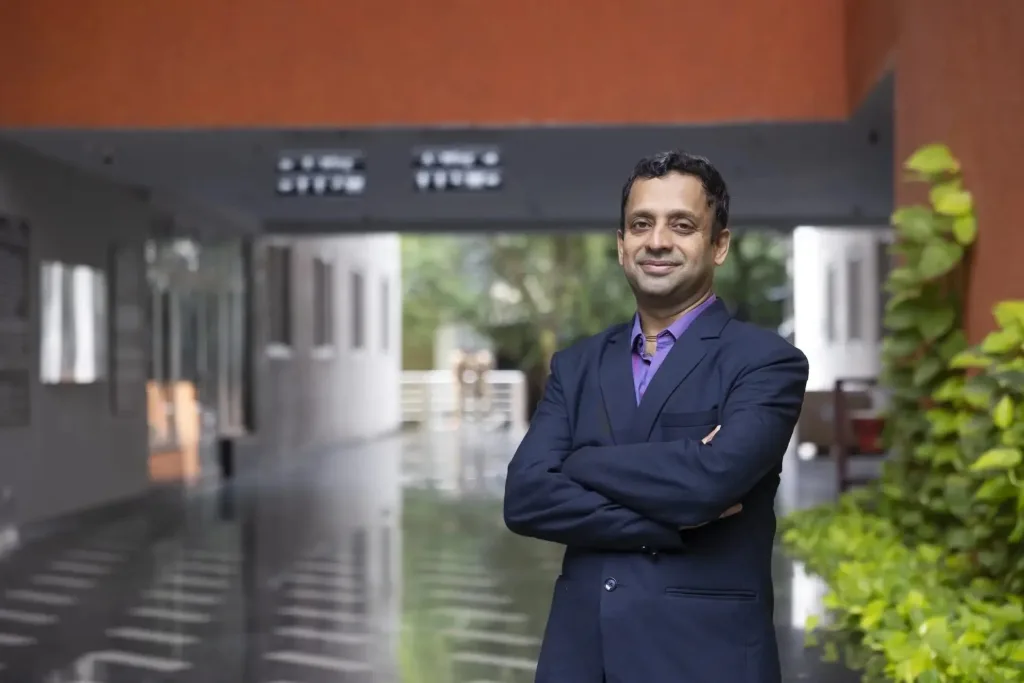
Indian computer scientist Prof. Ganesh Ramakrishnan, founding director of BharatGen and professor at the Indian Institute of Technology Bombay, was recognised for his work on multilingual AI.
Ramakrishnan leads BharatGen, an open-source AI initiative focused on more than 22 Indian languages. Its systems are designed to process text, spoken dialects and official documents, with applications in healthcare, agriculture, education and public services.
The initiative seeks to address barriers faced by communities that do not primarily communicate in English and enable them to interact with digital systems in their own languages.
Ramakrishnan has advocated an open model that allows communities to develop and adapt AI technologies to their own needs rather than relying exclusively on systems developed elsewhere.
Debjani Ghosh — India, Technology Leader and Advocate for Human-Centric AI

Indian technology leader Debjani Ghosh was recognised for her work promoting human-centred AI and expanding access to technology and economic opportunities.
Ghosh leads the Frontier Tech Hub at NITI Aayog and has focused on the potential of emerging technologies to improve the livelihoods of informal workers, including farmers and street vendors.
She previously served as president of NASSCOM, where she led FutureSkills PRIME, a public-private digital skills initiative that has reached more than 3.4 million learners, with women accounting for more than 40 per cent of participants.
Ghosh has argued that the impact of technology should be measured not only by its sophistication but by its ability to expand human capability, dignity and agency.
Chenai Chair — Zimbabwe, African Language AI Champion and Digital Rights Advocate

Zimbabwean digital policy leader and feminist researcher Chenai Chair was recognised for her work on African-language AI and digital rights.
Chair, director of the Masakhane African Languages Hub, has worked to expand the availability of African-language datasets used in AI development.
The initiative brings together linguists, sociologists and local communities to develop open-source language datasets and improve the ability of AI systems to operate in African languages.
Chair has also advocated for greater participation by African communities in decisions around the development and deployment of digital technologies, with an emphasis on language inclusion, gender equity and digital rights.
Hon. Dr Bosun Tijani — Nigeria, Nigerian Tech Minister and AI Leader

Nigeria’s Minister of Communications, Innovation and Digital Economy, Dr Bosun Tijani, was also named among the 2026 champions.
Tijani, who co-founded the pan-African innovation hub Co-Creation Hub, has been advancing Nigeria’s efforts to develop domestic AI capabilities and strengthen the country’s digital infrastructure.
His work includes Nigeria’s National AI Strategy and the 3 Million Technical Talent programme, which has trained hundreds of thousands of young people in digital skills.
The programme is part of wider efforts to develop local technical expertise and datasets while expanding the use of technology in sectors including health, agriculture and education.
Tijani has argued that African countries need to develop the skills, infrastructure and institutions required to shape their own technological futures rather than relying solely on technologies developed elsewhere.
The Goalkeepers initiative said the 2026 champions demonstrate how innovation can be applied to real-world challenges while expanding access to opportunities created by emerging technologies.
The recognition comes amid growing global debate over the opportunities and risks presented by artificial intelligence, particularly its potential impact on developing countries and communities that have historically had limited access to advanced technologies.
The champions’ work reflects different approaches to addressing those challenges — from developing AI in local languages and building domestic technical capacity to applying technology in agriculture and expanding digital skills.
The Goalkeepers Awards are part of an initiative focused on accelerating progress towards the 17 Sustainable Development Goals by highlighting individuals and organisations working on solutions to global development challenges.
The 2026 cohort places particular emphasis on making AI more inclusive and ensuring that communities can participate in shaping technologies that are increasingly influencing access to information, public services, economic opportunities and development.