Ni kubaya, (slang meaning, things are thick!) This is almost the standard answer in Kenya these days to the question, ‘how are you?’
Are things really that bad? As per the latest data from the Kenya National Bureau of Statistics, electricity, housing, cooking gas and other fuels are priced at 9.6 percent higher on average than a year ago.
Behind each of these statistics are individuals and households that are struggling and barely getting by. One of these individuals is a gentleman that I know. In recent weeks, he was desperate to find some Shs27,000 so that he could visit Pastor Ezekiel’s Church for a special deliverance session. I am a strong believer in the power of prayer. However, in this instance, the special deliverance session entailed numerous expenses that ranged from holy handkerchiefs, special water to special financial offering.
It’s not my place to invalidate the sincerity of lack thereof of any man or woman of God. But we all have a moral responsibility to validate and articulate the desperation that drives people to clutch at any vestige of hope offered to them.
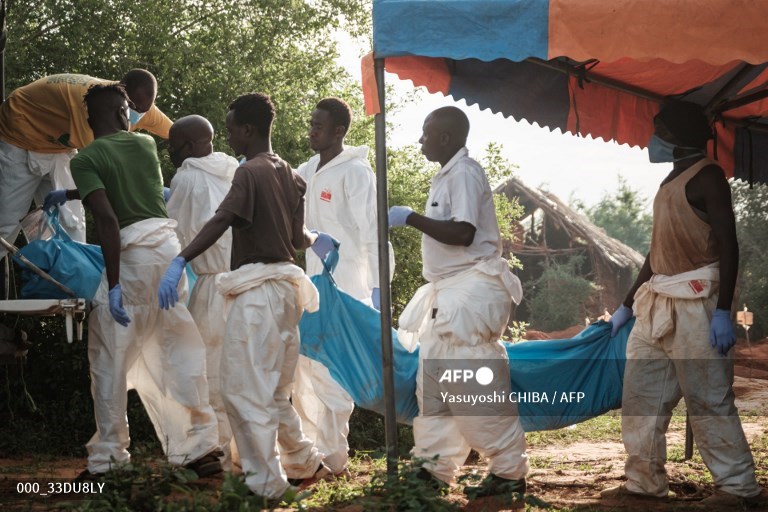
It’s easy to dismiss the victims and followers of Mackenzie as gullible and naïve. Yes, they are, but behind that naiveté is desperation due to poverty. Desperation drives people to do desperate things as evidenced in the Shakahola story. As such, our focus should be on rooting out the desperation. As long as desperation abounds, cults or cultic figures will flourish.
It augurs ill for mainstream churches that thousands of people are not finding hope and help in them. They must rekindle the social ministry that is beautifully captured in the twenty fifth Chapter of Mathew. Let us feed the hungry; visit the sick; minister to those in prison and clothe the naked. Doing this will land knockout blows on desperation. Indeed, we have a spiritual and moral obligation to minister to the needy in consistent, strategic fashion.
At a systemic level, Shakahola only thrived because of intelligence failures. Even as we root out the desperation that fuels cults, we must also tackle the intelligence failure that enables these cults to continue hoodwinking congregants. Terrorists were only able to attack America on 9/11 because of intelligence failure that left the world’s lone superpower woefully exposed.
Kenyans will remain exposed to the threats posed by extremists like Mackenzie unless our intelligence drastically pulls up its socks.
It’s inconceivable that people died over several months, possibly years, without the intelligence sniffing out Mackenzie’s diabolic schemes. What other ticking time bombs are just waiting to explode?! Just as USA overhauled its intelligence system post‑9/11, we must also overhaul ours post-Shakahola. This new intelligence regime should encompass all life-threatening threats. This includes road accidents and religious extremism.
As such, if there are rampant broken braking systems on our roads, intelligence should pick that up before newspaper headlines report on brakes-related road carnage. Similarly, church-aided intelligence should sniff out harmful extreme doctrines before they gravely maim both bodies and spirits.
Two months ago, the roof of a St. Stephens Ministry Church building in Tiva Kitui was carried away by strong winds. My late father Bishop Kalua founded this Ministry years back.
When I informed a close friend that our Church’s had been blown off, he requested me to repeat my statement. He then reminded me that what had been blown off was the roof of a building, not the Church.
My friend’s words have special resonance as we grapple with Mackenzie of Shakahola and other forms of religious extremism. We need to go back to the roots. The Church encompasses people, believers. It derives its very identity from God, not from any singular individual. We must therefore build and lift each other up. In so doing, we will be lifting up the Church. If we do so, there will be no room to lift up any individual! And God will be glorified. Think green, act green.
Dr Kalua Green is the Founder and Chairperson of Green Africa Foundation, an organization that was founded in the year 2000 that champions Sustainable Development in Africa.