By Dr.David Mazi Matsanga in London
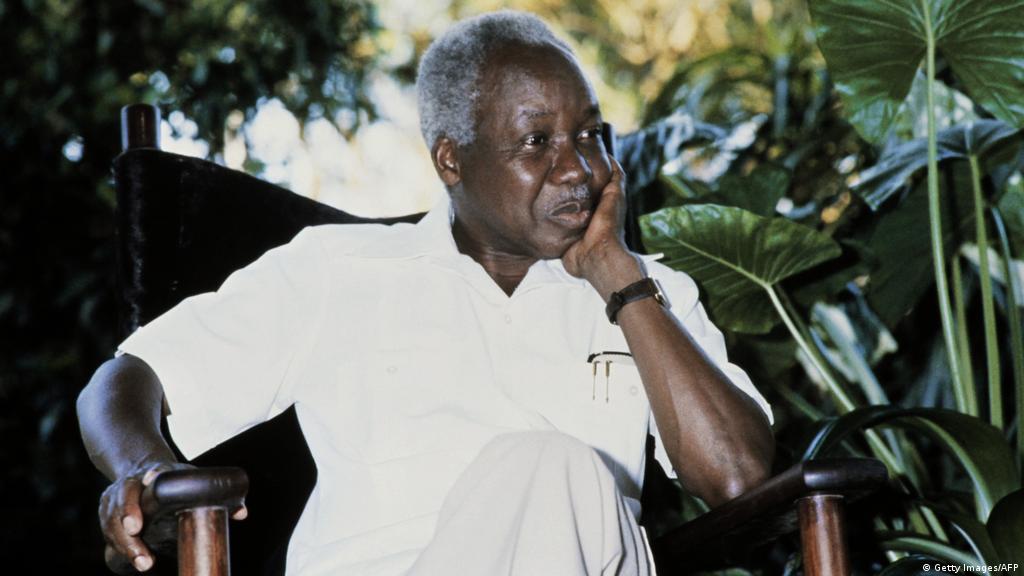
Last week marked 23 years since the death of Mwalimu Julius Kabarage Nyerere. Truly there was little necessity to narrate at length and critically this great paragon of Pan-Africanism, and of his high mission of Ujamaa.
That ground has been fully occupied, the whole field of fact and fancy has been gleaned and garnered. Any man can say things that are true of Nyerere, but no man can say anything that is new of this gallant son of Africa.
Nyerere was an astute teacher, a Pan-Africanist, a plain and complex, shrewd and transparent, tender and iron-willed leader whose legacy still holds for generations of his Country, Tanzania. Indeed, Nyerere had no equals among his peers.
The late President was armed with a fierce ambition, an exceptional political acumen, and a wide range of emotional strengths,forged in the crucible of personal integrity, Nyerere was able to mould a societal structure for Tanzania that has stood the test of time.
As Tanzanian’s and the world marked 23 years, since the father of the nation, Mwalimu Julius Nyerere departed, his vision, ideas, and dreams have continued to materialize and bequeath the nation and Africa as a whole in various aspects today.
After his tenure which ended in 1985 as the founding President, decades later succeeding governments have continued putting his insights and ideas alive by implementing several programmes, projects and policies for the prosperity of the nation.
Nyerere’s legacy stretching from social, political to economic development have been instrumental in the Peace, Development and Stability of Tanzania. Today, Tanzania is the only East African Country not bedeviled by the jinx of tribalism courtesy of Nyerere’s ideology of Ujamaa.
Today, I commemorate Mwalimu Nyerere as a true son of Africa, a great nationalist of the first generation of African leaders who struggled for independence. A leader whose nationalism was rooted in pan-Africanism, and rode on a universal dimension transcending narrow territorial, ethnic, or racial nationalisms.
Nyerere characterised African countries as artificial entities, as vinchi (statelets) ‘ as he derided them in Kiswahili ‘carved out by imperial powers. His clarion call, therefore, was for African liberation and African unity. Only thus could the African people overcome both oppression and humiliation.
Today, I am happy that his ideas about integration have been taken up through EAC expansion of member States and cooperation, a major step towards liberation of our Countries. Nyerere’s vision of Pan-Africanist liberation lay in the preamble in which African people could say: ‘Finally we have stood up!’
Even though this paragon of Pan-Africanism did not succeed in actualizing his vision during his lifetime. But like all great visions, today his arguments and ideals are as fresh, and perhaps, have greater relevance after the rude interruption of neoliberalism of the last two decades.
Even though it’s 23 years since Nyerere departed, his legacy still lives on. He left an indelible mark on the history of Africa, whenever great men that ever rose in Africa will be mentioned, Mwalimu Julius Kabarage Nyerere will feature prominently.
The Author is a Political scientist and Conflict Resolution expert and Investigative journalist based in London, UK.