In the wake of Taiwan’s recent presidential election victory by pro-“independence” candidate Lai Ching-te, Kenya has firmly restated its commitment to the “One China Policy.”
The “One China Policy” is a diplomatic recognition of China’s position that there is only one legitimate Chinese government. This policy traces its origins back to 1949, marking the end of the Chinese Civil War. At that critical juncture, the world witnessed the establishment of two distinct Chinese governments: the People’s Republic of China (PRC), led by the Chinese Communist Party, and the Republic of China (ROC), which retreated to Taiwan, led by the Chinese Nationalist Party (Kuomintang).
Since then, the PRC has consistently asserted that Taiwan is an integral part of its territory, while the ROC maintains its independent governance. Beijing’s position on Taiwan remains crystal clear: it is a renegade province that will eventually reunify with mainland China. To that end, China has not ruled out the possibility of peaceful reunification but has also warned against separatist ambitions and even hinted at the potential for a full-scale invasion.
Kenya’s resolute stance underscores the importance of respecting territorial integrity and non-interference in other countries’ domestic affairs.
China has maintained a long-standing policy of non-interference in the internal matters of other nations, even when providing financial assistance. This principled approach sets China apart in the international arena, where interference often accompanies aid from Western countries. Kenya’s unwavering support for the “One China Policy” reflects its robust diplomacy, in contrast to countries that remain indecisive on this issue.
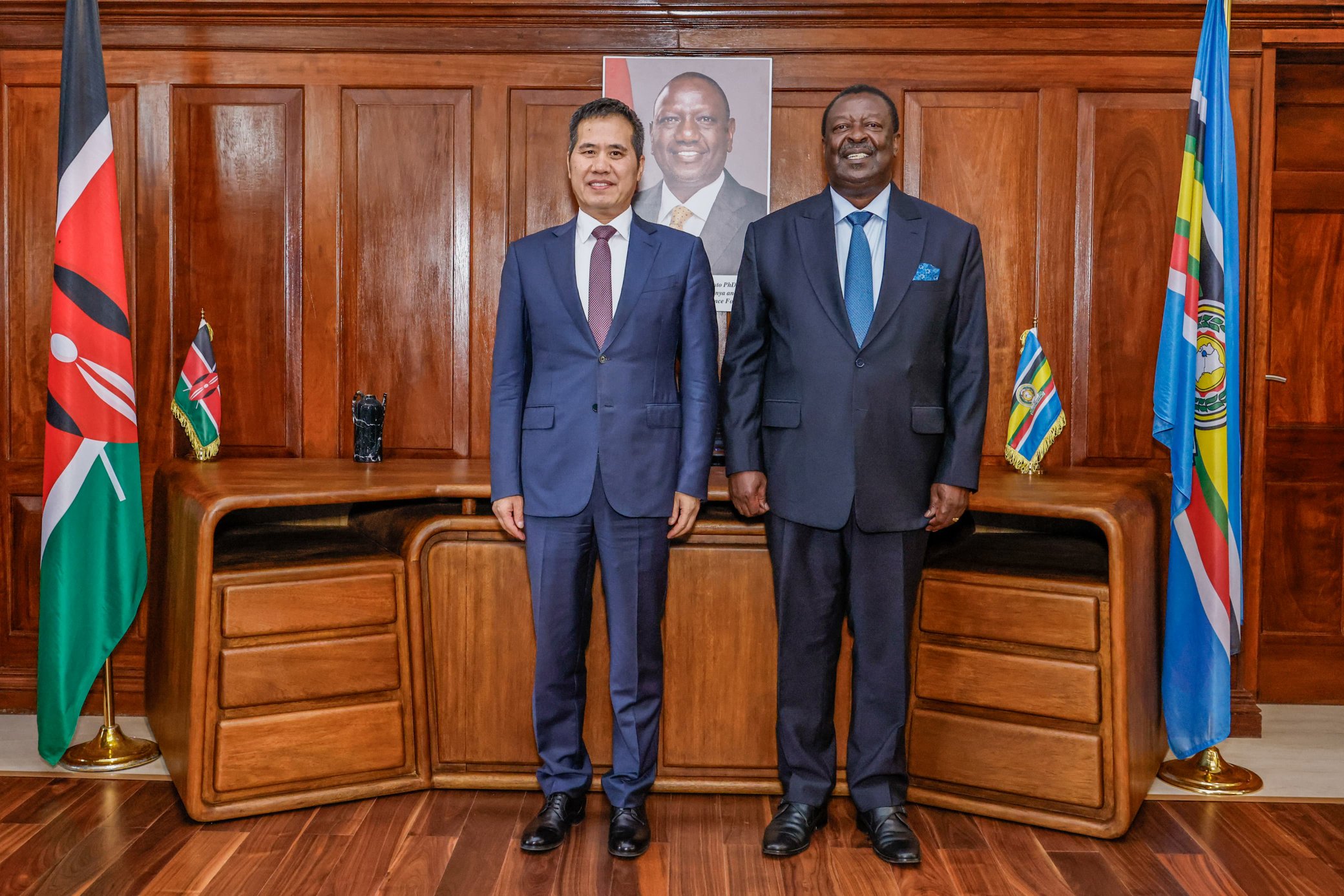
Kenya’s diplomacy, exemplified by President William Ruto and his Prime Cabinet Secretary Musalia Mudavadi, who is also in charge of the Foreign Affairs docket, is commendable. Since taking on this role, Mudavadi has demonstrated consistent and principled diplomacy, firmly aligning Kenya with the “One China Policy”.
This, no doubt, reaffirms that Kenya is not a fence sitter when it comes to matters of international importance. The country’s clear and principled stance on the One China Policy illustrates its commitment to diplomatic clarity and adherence to established norms. Rather than opting for neutrality or ambiguity, Kenya demonstrates its willingness to take a stand and uphold the principles of territorial integrity and non-interference in the affairs of other nations. This resolute position reflects Kenya’s strong diplomatic posture and its dedication to making informed and principled decisions on the global stage.
The “One China Policy” has been central to the peaceful development of cross-Straits relations. It asserts that Taiwan is an integral part of mainland China, a position that Beijing has consistently upheld, even hinting at the possibility of reunification through peaceful means. With decades of cross-Straits exchanges, dialogues, and cooperation, it is evident that unification with mainland China is an inevitable outcome.
As cross-Straits relations move toward deeper integration and high-quality development, the sustained growth and prosperity of the Chinese mainland play a crucial role in supporting this process. The mainland has implemented numerous policies and measures to promote integrated development across the Taiwan Straits, laying the foundation for peace and stability.
Recent developments, such as Nauru’s decision to sever ties with Taiwan and recognize Beijing as the sole legitimate government of China, have shifted the discourse surrounding Taiwan’s international status. Nauru’s bold move challenges the narrative of “Taiwan independence” and redirects the conversation towards the consequences of endorsing separatist ambitions. This Pacific Island nation’s decision highlights the significant impact even smaller states can have on international affairs.
Kenya’s steadfast support for the “One China Policy”, therefore, not only reflects its robust diplomacy but also reinforces the importance of respecting territorial integrity and non-interference in the affairs of other nations.
As cross-Straits relations progress towards deeper integration, the world should recognize the inevitability of reunification and advocate for peaceful dialogue and cooperation. The recent actions of countries like Nauru serve as a reminder that even small states can influence global discourse and promote responsible international relations.
Elijah Mwangi is a scholar based in Nairobi; he comments on local and global matters.