China and Zambia’s relationship has grown over the past six decades, with their ties dating back to the sixties, which are at the core of Zambia’s development ambitions.
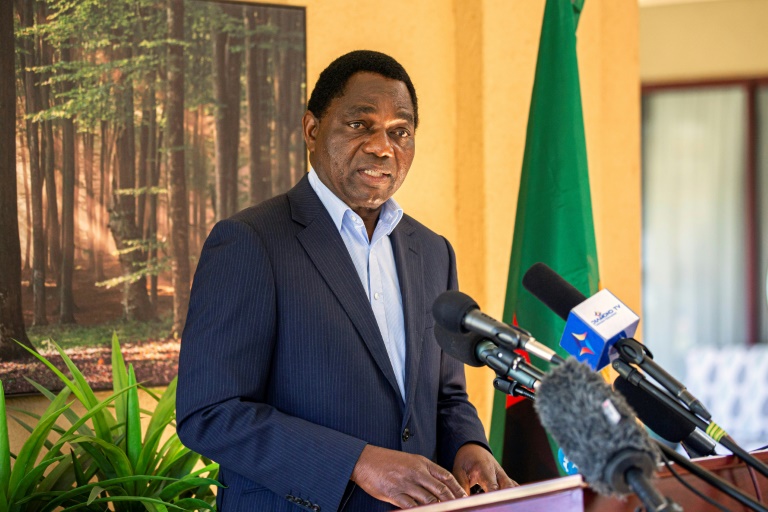
The two countries have maintained a positive momentum of development. Zambian President Hakainde Hichilema, an admirer of China’s development rate, said in an interview he was keen on promoting deeper ties between the two countries for a shared future.
“China and Zambia’s working relationship, strategic working relationship is so cardinal to the achievement of our own objectives, our own developmental agenda to better the lives of the people of Zambia. And obviously, we believe this is also mutual,” President Hichilema said.
The president is confident that China will continue to play a leading role on the global stage and work closely with Africa through initiatives such as the Forum on China Africa Cooperation and believes that Zambia and the African continent can draw lessons from China’s eradication of extreme poverty.
“What China has achieved from where it was 50 years ago and where it is today is admirable. Unfortunately, we still have to do a lot of work in Africa to accelerate and I think lessons from China are truly relevant to us in Zambia, on the African continent because of those similar backgrounds of under development at the time 50 years back. So I think we can do better to learn, what worked for them, how we can adopt them to work for us as well, so that we can accelerate to basically improving the human development index and factors,” he added.
He adds that the Belt and Road initiative, a Chinese-led effort aimed at improving regional connectivity and economic integration is of great significance to his country’s industrialization agenda and opening trade in the continent through access.
Through the Belt and Road initiative and the Forum on China-Africa Cooperation, Hichilema says he’s confident Zambia can fulfill its potential and greatly contribute towards global food security.
“Zambia has the agronomical conditions to produce, process to sell, deliver, distribute into our own market, into the regional market 300 million plus people and into the African continent and to be a food net contributor to the impending global food insecurity. This is important and is anchored around infrastructure, anchored around more investment and more value addition and obviously, the jobs will come out of it but more to add on to the global food security which is now at risk,” according to Hichilema.