March 19 – The United States has announced up to $10 billion in support through its export credit agency for the Mesabi Metallics project in Minnesota, signalling a broader push to secure critical supply chains and deepen industrial partnerships, particularly with India.
The announcement was made during the Indo-Pacific Energy Security Ministerial and Business Forum in Tokyo, underscoring Washington’s growing alignment of economic and strategic priorities in the region.
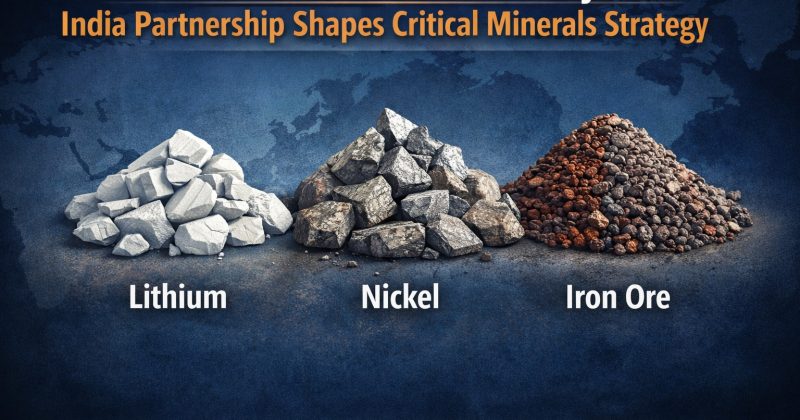
Led by Essar Group, the project will develop an integrated iron ore mining and processing facility in Minnesota’s Mesabi Iron Range. It is expected to produce about 7 million tonnes annually of high-grade direct-reduction iron pellets, a key input in modern, lower-emission steelmaking.
US officials view the initiative as part of a wider strategy to reduce reliance on external suppliers in critical minerals and strengthen domestic industrial capacity. The project is also expected to create hundreds of jobs while reinforcing the country’s manufacturing base.
Beyond its domestic impact, the project highlights the growing importance of US–India industrial cooperation. Essar’s involvement points to Washington’s use of strategic partnerships to build more resilient supply chains amid intensifying global competition.
Analysts say the Indo-Pacific setting reflects a shift towards integrating economic security with regional strategy, with financial tools being deployed to back projects that strengthen both domestic capabilities and ties with trusted partners.
The Mesabi project also comes amid a broader global contest over supply chains, particularly in critical minerals where China maintains a dominant position. In response, the US is combining domestic investment with international collaboration to reduce vulnerabilities and enhance resilience.
The timing also aligns with deepening coordination among key Indo-Pacific partners, including Japan, signalling an emerging network of cooperation where countries contribute complementary strengths across industrial and technological sectors.