
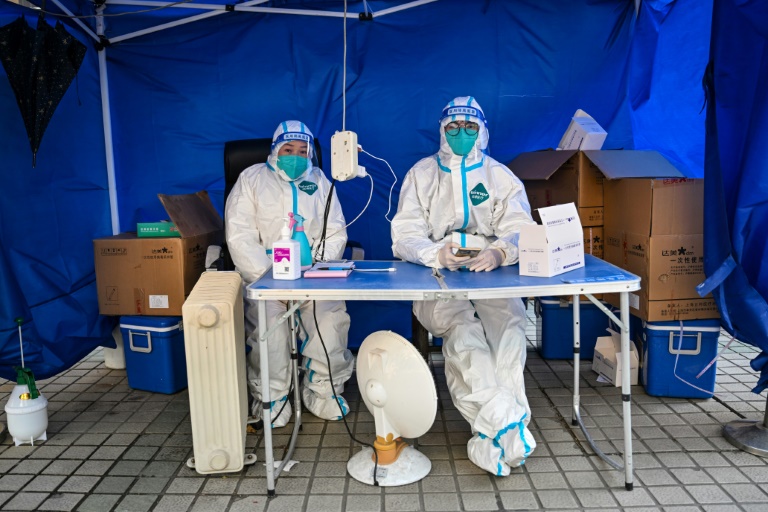
The recent revision of China’s zero-COVID policy with the significant easing of anti-pandemic measures particularly on cross-border travel and quarantining has been hailed by the country’s partners.
This will clear the way for resumption of people-to-people exchange and business travel, rebuild foreign investors’ confidence in the Chinese market and contribute to restoring optimism and reinstating China as a priority investment destination.
China has promised to effectively coordinate COVID response and socioeconomic development, steadfastly expand opening-up, and work with all sides to strengthen international cooperation against the pandemic, keep global industrial and supply chains secure and stable, and revitalise the world economy.
Not everyone is happy though. Some Western media have already launched a massive disinformation campaign about the COVID situation in China, alleging a spiraling of infections and deaths. They have deliberately hyped up and even misrepresented China’s COVID policy adjustment, and yet avoided reporting on the deficiencies and heavy price paid in their own countries’ COVID response. This is nothing but double standards and is clearly against journalistic ethics.
More diabolically, some of these countries and their allies have already slapped in-bound Chinese travelers with tough entry rules, and published a blanket travel advisory for Chinese citizens.
Effective January 5, a recent advisory warned that the U.S. Centers for Disease Control and Prevention will require a negative COVID-19 test result, taken within two days of departure, or proof of recovery from the virus within the last 90 days, for all travelers, age two years and older, to the U.S. on flights originating from the People’s Republic of China, including the Special Administrative Regions of Hong Kong and Macau.
Japan and India have announced that visitors to Japan from China will also have to test upon arrival. Although these announcements are significant only for their nuisance value, they are aimed at discrediting the world from China’s resilience and effective containment of the pandemic.
Since COVID-19 began three years ago, the Chinese government has refined the response measures by keeping them science-based, targeted and responsive to the evolving situation and has effectively coordinated COVID response with economic and social development, contributing significantly to global solidarity against the pandemic and world economic recovery.
The current COVID situation in the world continues to call for a science-based response approach and joint effort to ensure safe cross-border travel, keep global industrial and supply chains stable, and restore world economic growth.
Following the decision to manage COVID-19 with measures against Class-B infectious diseases, the Chinese Government has moved to ease cross-border travel to and from the country starting January 8.
First, inbound travelers will need to show a negative nucleic acid test taken within 48 hours prior to departure. However, the travelers will no longer need to apply for a health code from Chinese embassies or consulates.
Second, nucleic acid tests will no longer be conducted on inbound travelers upon arrival. Those with no issues to report in their health declaration who have been given regular customs inspection and quarantine clearance can enter China without being subject to quarantine.
Third, passenger capacity limits on international flights will be removed with phased increases in the number of flights and refined distribution of flight routes.
Fourth, China will further refine arrangements for foreign nationals’ entry into China for such purposes as resumption of work, business, education, visiting relatives and family reunion and provide corresponding visa facilitation.
Fifth, China will adjust the cargo-only policy at ports of entry and gradually resume entry and exit of passengers by land and water and provide greater convenience for Chinese and foreign crew change in China.
Sixth, China will resume outbound tourism for Chinese citizens in an orderly fashion. The U.S. is also considering COVID entry restrictions for travelers from China.
The fact is that since COVID began three years ago, the Chinese government has always given top priority to the people and their lives. Globally speaking, China has had the lowest rates of severe cases and mortality. Despite the pandemic, average life expectancy in China went up from 77.3 to 78.2 years. Even when the global Human Development Index dropped for two years straight, China went up six places on the Index.
Countries adjusting the COVID policy would invariably go through a period of adaptation. China is no exception as it shifts gear in its COVID policy. The country’s COVID situation on the whole remains predictable and under control. Beijing is the first city to have gone through the infection peak, where life and work are coming back to normal as we speak. Relevant Chinese departments have made scientific assessments of the potential peaks in other provinces and cities. They have made necessary preparations and are confident that this process of policy adjustment and shifting of focus will go ahead in a steady and orderly way.
Anyway, many countries have said at the moment they do not plan to adjust their entry measures for travelers from China. For the sake of social and economic stability, all parties should follow a science-based principle, make joint efforts to ensure safe cross-border travel, and contribute to global solidarity against the pandemic and world economic recovery.