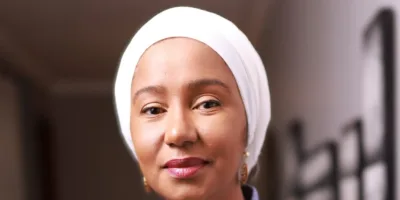

By Pamela Mutembei, Investment Director, HEVA Fund
NAIOBI, Kenya, Sept 14 – Kenya’s next generation of businesses will not necessarily be built around factories, machinery, land or buildings. Some will be built around a camera, a laptop, a fashion label, a beauty brand or an individual’s creative talent.
Yet when these entrepreneurs seek capital from a commercial bank, they are assessed using a lending model built for a different economy. The question is simple: What asset do you have that we can take as collateral? That excludes some of the most dynamic businesses in Kenya’s creative economy, whose value sits in intangible assets — intellectual property, brands, audiences, future income streams. Globally, the World Bank estimates creative industries generate about $2 trillion in revenue and support more than 50 million jobs. This is not only a Kenyan problem — across emerging markets, conventional finance struggles to lend against assets it cannot easily value.
A youth jobs problem
For Kenya, this arrives at a critical moment. The World Bank estimates that nearly 80 per cent of Kenyans under 35 work in informal, low-quality jobs — making enterprise support a jobs agenda, not just an entrepreneurship one.
The World Bank’s Kenya Youth Employment and Opportunities Project showed what happens when finance, skills and support arrive together: it helped create 125,000 direct jobs and enabled beneficiaries to employ 30,000 more. Yet access remains uneven — under the Bank’s SAFER programme, youth made up 22 per cent of beneficiaries but only 11 per cent of loan volume.
Incomplete, not wrong
Banks have legitimate reasons to demand financial records, repayment history and collateral — lending is a business, and risk must be managed. But the model narrows too far for creative enterprises. A filmmaker may lack land but hold a distribution agreement; a fashion designer may lack a building but have a loyal customer base and confirmed orders. Kenya’s digital economy is already making a broader evidence base possible — transaction data can reveal real cash-flow behaviour even where collateral is absent, a potential the World Bank has itself flagged.
Jimmy Jay: capital matched to demand
At 36, Jimmy Jay runs a business far removed from the single-chair barbershop he started over a decade ago. Jimmy Jay Spa now combines barbering, salon and spa services with a training academy, employing about 55 people. When Covid-19 struck in 2020, the business closed for two months; Jay kept it alive with late-night home-call barbering. By 2023 he had added salon and spa services and launched the Jimmy Jay Beauty and Spa Academy. In December 2024 he applied to HEVA Fund’s Ota Growth Fund and received Sh10 million in October 2025 — financing that let him source equipment from China, clear obligations, hire 13 more staff and invest in digital marketing. The point is not the sum, but what happens when capital meets proven demand.
The business behind the curtain
The same lesson comes from Story Zetu. In 2019, Gathoni Kimuyu and colleagues were preparing to stage Tom Mboya, a major production inspired by the Rusinga Festival. They had the concept and the audience, but not the roughly Sh4.8 million it required — the festival could contribute just Sh50,000. HEVA’s support, through its Sanara programme, helped bridge that gap, allowing the company to move from a 350-seat venue to one seating roughly 640. The show sold out, running 22 times and employing about 51 people including cast and crew — evidence of the multiplier effect creative-economy investment can generate.
A different kind of credit model
There is no single financing model for the creative economy — more than 300 creative categories, from film to fashion to digital content, carry different revenue cycles and capital needs.
This does not mean abandoning discipline; it means expanding the definition of evidence. A creative entrepreneur may not own land or a building, but may have years of M-Pesa and bank transaction records, confirmed purchase orders, signed contracts, recurring customers, receivables, inventory or predictable platform revenues — all of it evidence of an ability to generate and repay cash. The question should evolve from what collateral do you have to what evidence do you have that your business can generate and repay cash?
Credit guarantees and risk-sharing mechanisms also have a role. Entering an emerging sector like the creative economy is difficult for lenders with little historical performance data; well-designed guarantees can absorb some of that early risk, letting institutions build portfolios and learn from real borrower behaviour. The objective is not to remove risk from lending, but to price, understand and share it more intelligently.
From catalytic capital to commercial finance
Catalytic capital should be a bridge, not a destination. It should help an enterprise establish financial records, demonstrate demand, strengthen governance and build repayment history — the foundation on which commercial lenders can then step in at scale. That is why the Sh20 million facility between HEVA Fund and NCBA, offered at 9 per cent, matters: it connects catalytic-finance experience with mainstream banking, and each successfully financed enterprise generates performance data — who repays, which subsectors are predictable, what structures work — that helps the wider market mature. The goal is not for creative businesses to remain dependent on concessional capital, but for catalytic capital to make them commercially financeable — so that today’s underserved creative entrepreneur becomes tomorrow’s mainstream borrower.
The demographic dividend needs new models
By 2050, more than 600 million people will join sub-Saharan Africa’s working-age population, and one in three people aged 15–34 globally will be African. That wave can drive growth only if young Africans find productive work — and the creative economy, financed on its own terms rather than yesterday’s, can be part of that engine.
For Kenya to realise the ambitions of Vision 2030, we must move beyond creating jobs for young people, toward enabling them to build businesses that create jobs for others — including women, youth and persons with disabilities who have long faced barriers to capital. A young creative entrepreneur is not necessarily a borrower without collateral; they may be a business owner with an audience, a contract and a viable future cash flow.
Kenya’s creative economy does not need charity. It needs structured capital, patient investment and financial institutions willing to understand how creative businesses actually make money — a system flexible enough to finance the economy already emerging.