
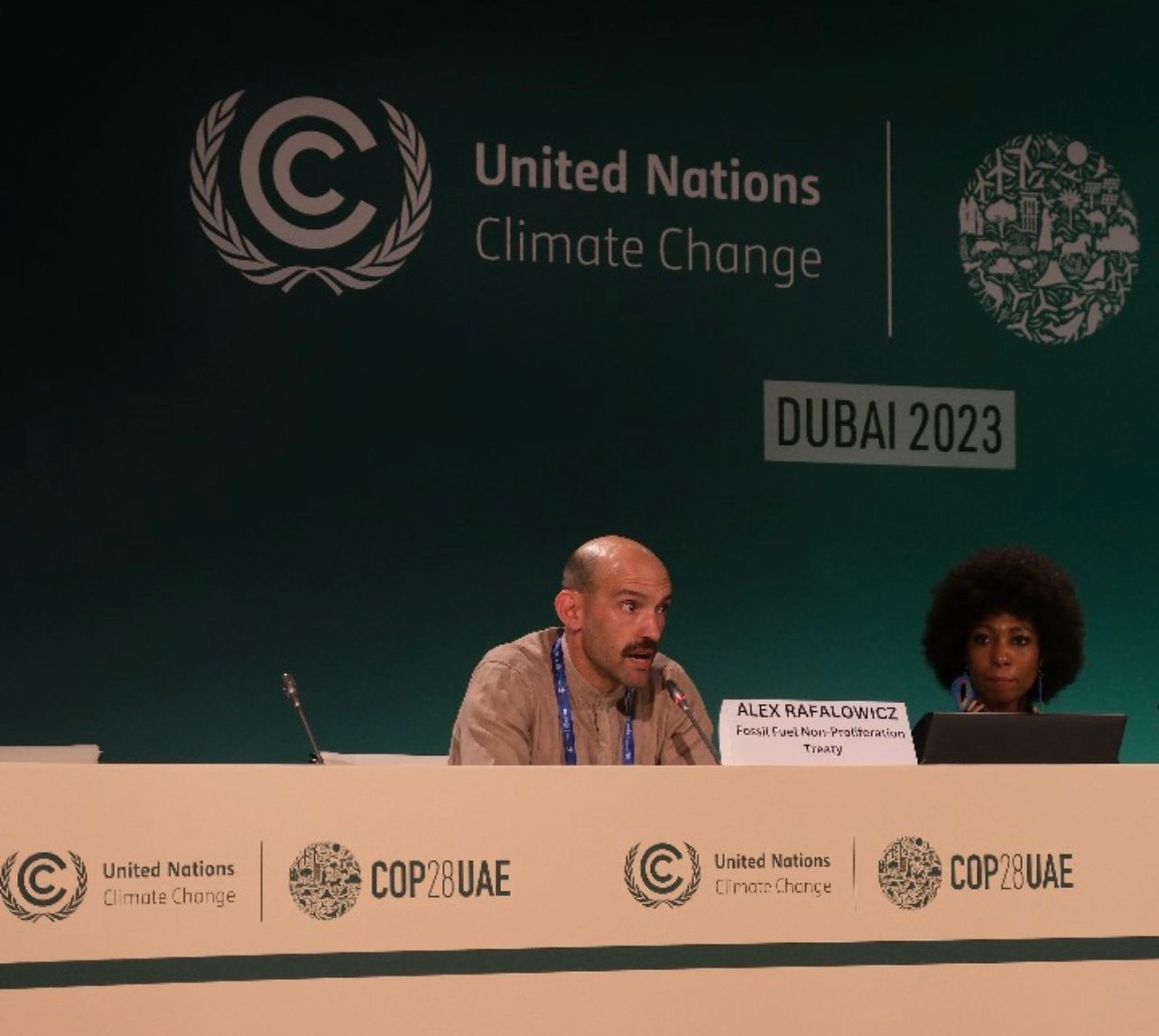
NAIROBI, Kenya Dec 16 – As COP28 came to a close with a historic agreement to transition away from fossil fuels, twelve nations have jointly called for the negotiation of a fossil fuel non-proliferation treaty.
Despite barriers to negotiations and financing for a fossil fuel phase-out within the UNFCCC framework, momentum is growing for this movement. Four of these nations have endorsed the proposal in Dubai: Palau, Colombia, Samoa, and Nauru.
Alex Rafalowicz, Executive Director of the Fossil Fuel Non-Proliferation Treaty, expressed that while acknowledging fossil fuels as a significant political signal, the COP28 outcome falls short of addressing the climate crisis effectively, relying on unproven technologies that should be avoided.
Rafalowicz pointed out that responsible nations for the climate crisis did not provide the necessary finance, technology, or actions to initiate the phase-out of fossil fuels during COP28; instead, they hindered progress.
He noted that the record number of fossil fuel lobbyists at COP28 demonstrated the industry’s desperate efforts to defend its interests at the expense of human life.
Rafalowicz further stated that while the UNFCCC continues to be a critical forum for negotiating international climate policy, the COP28 outcome highlights its inadequacy in managing and financing an equitable transition away from oil, gas, and coal. Urgent international mechanisms are needed for phasing out fossil fuels.
After three decades of climate talks, a group of nations, including Antigua & Barbuda, Colombia, Fiji, Nauru, Niue, Palau, Samoa, Solomon Islands, Timor-Leste, Tonga, Tuvalu, and Vanuatu, is leading efforts to secure a mandate to negotiate a new international mechanism for managing the phase-out of fossil fuels and financing a just and equitable global transition away from oil, gas, and coal.
Auimatagi Joe Moeono-Kolio, Chief Advisor (Pacific) of the Fossil Fuel Non-Proliferation Treaty Initiative, commented that while the COP28 outcome finally mentioned fossil fuels after 30 years of climate talks, it fell short of setting a clear plan to phase them out. He emphasized that expectations have been lowered to the point where incremental gains from COP28 are being celebrated, despite their low ambition.
The Fossil Fuel Non-Proliferation Treaty proposal is supported not only by governments but also by organizations such as the World Health Organization, the European Parliament, 101 Nobel Laureates, 600+ parliamentarians in 83 countries, 2,100 civil society organizations, 3,000 scientists and academics, and over 90 cities and subnational governments. This support reflects the urgent need for action to phase out fossil fuels.
Dr. Tedros Adhanom Ghebreyesus, WHO Director-General, highlighted the devastating effects of air pollution resulting from fossil fuel emissions, which claim the lives of over seven million people each year. He emphasized WHO’s support for robust climate action, including the phasing out of fossil fuels, to protect the health and well-being of all.
In summary, COP28 has concluded with a renewed call for a Fossil Fuel Non-Proliferation Treaty as nations seek more effective measures to address the climate crisis and transition away from fossil fuels.