
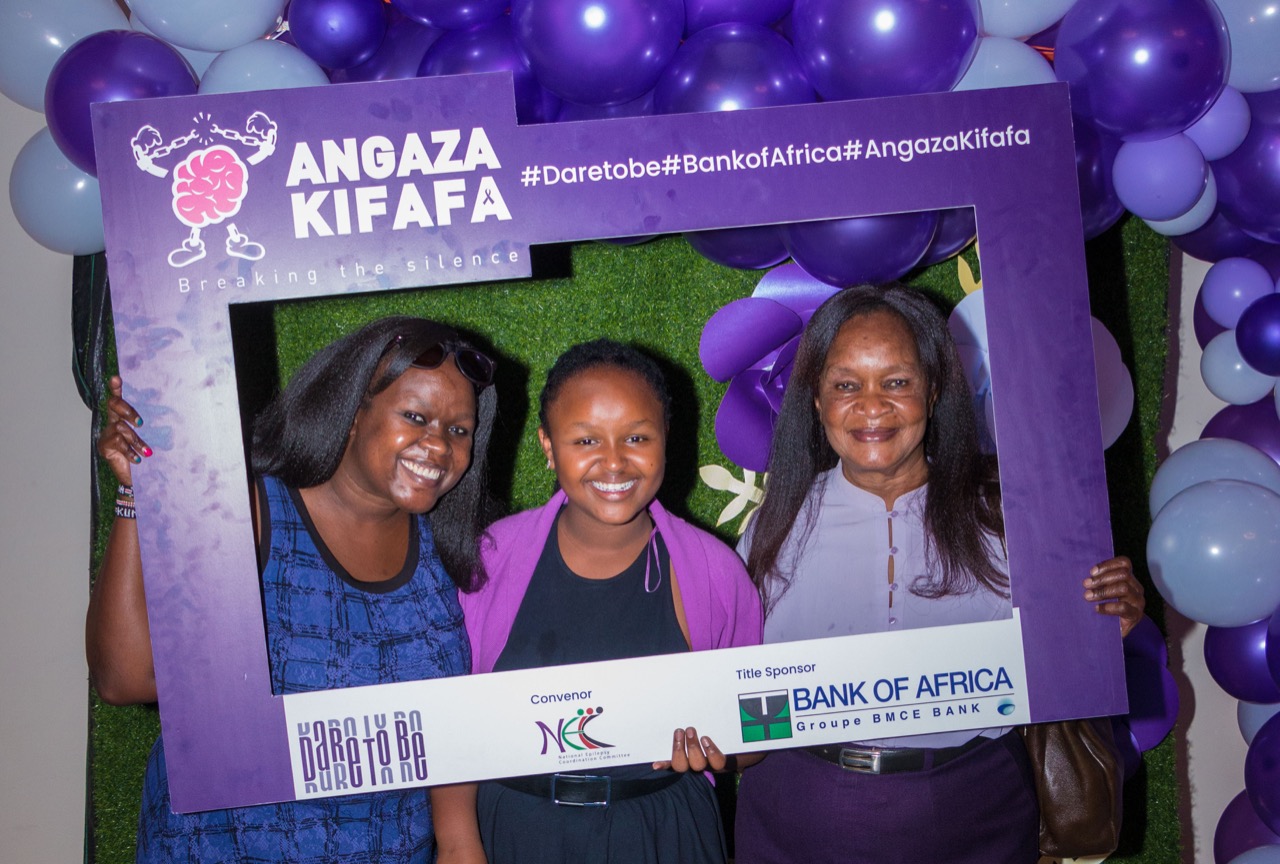
NAIROBI, Kenya, Nov 28 – The November epilepsy awareness month commenced with clarion calls from patients, caregivers, doctors, and Epilepsy stakeholders to increase awareness to prevent discrimination and eliminate myths and perceptions that permeate public thinking on the condition.
Epilepsy is a condition that affects approximately 70 million people worldwide, and an estimated one million of these are Kenyans.
The proportion of people with active Epilepsy who are not receiving appropriate treatment is between 60% and 80%, according to recent studies.
“Our vision is to see Kenya at a start bring down the rate of PLWE from the current 2% to at least 1%,” said Bank of Africa Managing Director Ronald Marambii.
He expressed the need for better public awareness of epilepsy as a treatable disease and for national-level action that targets both prevention and management.
Epilepsy is a neurological condition, which is characterized by acute seizures, including adverse seizures which cause involuntary movements, shaking, confusion and anxiety.
The high burden of epilepsy is attributed to the high case load associated with the increased prevalence of risk factors. Such as preventable brain injuries and to poor access to health-care services due to multiple barriers, including financial cost.
The chronic nature of epilepsy has wide-ranging socioeconomic impacts, including high health-resource utilization, reduced participation in education and work due to seizures, comorbidities, and stigma, behavioral problems, and psychological morbidity, all of which may contribute to overall poorer quality of life in addition to increased mortality rates.
Mwala* a parent to a child living with epilepsy knows too well the challenges the family has undergone in the treatment of his son’s condition. He narrates his ordeal and milestones.
“His head was filled with puss, you could not look at him, as opposed to holding him by hand, I had to carry him.”
“But now he is grown into a strong child he can even hit me with his elbows if I wrong him, anyone who had seen him before and now, least to say we are grateful,” Mwala said emphatically.
Ann Njeri a Social worker, music director and a PLWE talks about her experience from being first diagnosed with epilepsy, to achieving her dreams as a music director and seeking treatment and support through the National Epilepsy Coordination Committee’s (NECC) “Angaza Kifafa” annual campaign in partnership with Bank of Africa.
“I started having my seizures back in 2003 while in form 1. I did not immediately seek medical attention because to me they were just convulsions until 2005 when I was medically diagnosed with epilepsy,” said Njeri.
Njeri narrated that her life then took a turn, not for the better, since the changes that came with the condition were inevitable.
“It was difficult for the three years I was in high school because nobody understood me. This greatly affected my Kenya Certificate of Secondary Examination (KCSE) results; since I had multiple seizures during the examination period. Upon completion, I just had to enroll in a course that my marks allowed and that was social work.”
Njeri’s story gives us an insight on how Epilepsy robs one of the opportunities, and why there’s need for awareness to prevent discrimination and eliminate myths and perceptions public thinking on the condition.
“I wanted to be a journalist but social work worked for me, because up to date I will never trade it for anything else.”
The November epilepsy awareness month also saw the launch of the “DARE TO BE” documentary which weaves together the stirring true stories of individuals who have overcome devastating obstacles, stigma and embraced their condition of living with Epilepsy.
“We are keen on involving PLWE in planning and executing the event as they are the ones most affected by Stigma,” said the Secretary of NECC Fred Beuchi.
The documentary is the first that NECC has produced that – through the patient’s – documents the success and impact of the Angaza Kifafa Campaign since its inception 7 years ago.
World Health Organization (WHO) reports that the risk of premature death in people with epilepsy is up to three times higher than in the general population, with the highest rates of premature mortality found in low- and middle-income countries and in rural areas.
This is attributed to the wide treatment gap fuelled by superstitions, cultural beliefs, social stigma, and misconceptions surrounding the condition and compounded by a widespread lack of diagnostic equipment and well-trained personnel to provide quality care.
“There is an inadequate supply of appropriate medicines for epilepsy at the peripheral health facilities where a majority of patients seek treatment. This calls for a more comprehensive and multidisciplinary approach in the efforts aimed at reducing the burden of epilepsy,” said Beuchi.
Globally, one in every 26 people will develop Epilepsy in their lifetime and people with certain conditions may be at greater risk than others.
Statistics on those who suffer from the condition indirectly reach epidemic proportions.
The World Epilepsy Atlas gives four factors (the four A’s) as the treatment gap: lack of available, accessible, and affordable health care and lack of awareness.
People with Epilepsy respond to treatment approximately 70% of the time.