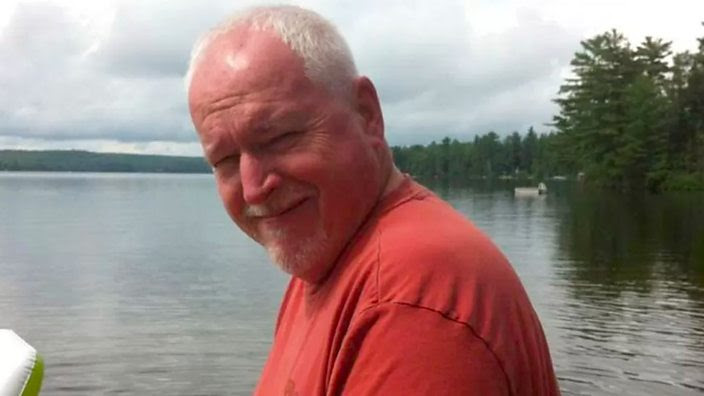
NAIROBI, Kenya Nov 6 – Documentary series Santa Claus: The Serial Killer explores the case of Bruce McArthur, a Canadian landscape gardener who also worked as a shopping mall Santa Claus.
Despite multiple encounters with police and even being given a conditional sentence after a violent attack years earlier, McArthur murdered eight men between 2010 and 2017. He was eventually arrested during an operation by Toronto police and investigators went on to find the body parts of his victims hidden in plant pots in a suburban garden where he worked.
At trial, the 67-year-old pleaded guilty to eight counts of first-degree murder for the killings.
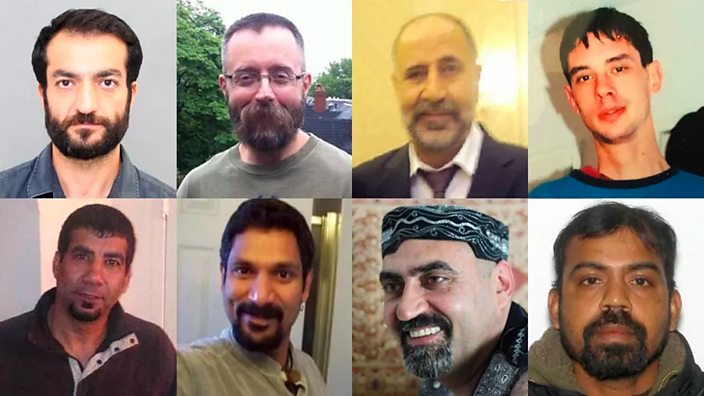
His victims were Selim Esen, Andrew Kinsman, Majeed Kayhan, Dean Lisowick, Kirushna Kumar Kanagaratnam, Abdulbasir Faizi, Skandaraj Navaratnam and Soroush Mahmudi. Most had ties to Toronto’s Gay Village neighbourhood – and most were people of Middle Eastern or South Asian decent.
But because McArthur pled guilty at trial, much of this evidence of the case wasn’t heard in court.
For a BBC Three documentary series, I travelled to Toronto to find out how Bruce McArthur killed eight people over seven years, undetected. There, I spoke to people who knew McArthur, the family and friends of his victims and a detective who had suspicions police were dealing with a serial killer many years before he was finally caught.
Secret lives of Bruce McArthur’s victims
Many of the men murdered by McArthur couldn’t always be honest about who they were having sexual relationships with because of things like their religious background. While making this documentary series, I discovered that these are some of the many things that made them vulnerable.
Krishna Kumar Kanagaratnam, for example, intentionally lived in the shadows because his claim for asylum after fleeing Sri Lanka had been rejected. He was never reported missing because his friends and family feared that raising an alarm could land Krishna in trouble.
Another victim, Abdulbasir Faizi, was of Afghan origin and had come to Canada as an immigrant. He lived with his wife and children and spent much of his time at work in a factory.
On the night he went missing, he visited a burger bar in Toronto’s Gay Village as well as a gay sauna. Abdulbasir’s wife is said to have been “really shocked” when she was told about his movements on the night he was last seen. Like many of the men McArthur targeted, Abdulbasir had a secret life.
Today, many members of Toronto’s Afghan community still struggle to talk publicly about what happened to Abdulbasir and the other Afghan Canadians targeted by McArthur. I found, through speaking to family and friends of some of the victims, that was partly down to taboos around sex and sexuality.
Victim Majeed Kayhan lived near the Church Street area of Toronto, close to the Gay Village. He’d moved there after the relationship with his wife broke down. They eventually divorced.
He was known as “Hameed” by his gay friends and and according to them was in a relationship with a man, who was known to Majeed’s family as his “roommate”.
Majeed’s nephew Saber says his uncle’s marriage didn’t work out but he maintained good relations with his children. “He loved his kids and had a good relationship with his wife,” says Saber. “They had normal communication.”
Despite the accounts of Majeed’s relationship with a man, his family say he was not gay.
“Absolutely not,” Saber adds. “I know him very well. He was more man than any other person that I know. He was not into those things. Maybe he was tricked into something.”
A lucky escape
One person who had a lucky escape from McArthur was Sean Cribbin, who met him in July 2017. They’d met and exchanged messages online on a hookup app, where McArthur used the user name “Silver Fox”.
McArthur’s profile described him as a “leather daddy” and he wrote that he “likes to push a guy’s limits so they go over the edge”. Sean travelled to McArthur’s Toronto apartment block where the plan was to have sex.
But Sean passed out after using the drug Gamma-Hydroxybutyric acid, more commonly known as GHB.
“When I came round I saw him standing, looking at me,” Sean says. “He never made any reference to the fact I’d lost 20 minutes. I took it as a bad date.”
But in fact, Sean is lucky to be alive. The encounter took place just a month after McArthur had killed his eighth victim.
Some time after the incident, a detective contacted Sean and said an image of him had been found on McArthur’s hard drive.
“He’d put a hood over my head and duct tape over my eyes,” Sean says, describing the image. “His hand was over a pipe jammed up against my throat and he took a photograph. That happened during the twenty minutes.”
Sean didn’t know the photograph even existed until he was informed by police but the bizarre ritual of posing his victims was in fact a part of McArthur’s repeated behaviour.
Police found numbered folders on McArthur’s hard drive representing each of the eight men he murdered. McArthur would also dress the victims in a fur coat and the folders contained multiple images of the men both before and after death.
He appears to have kept the images as souvenirs.
Just like many global cities, in Toronto the illegal drug GHB or “G” is readily available. The drug is used during sex by some because it reduces inhibitions. It has no taste or smell and can easily lead to black outs.
While it is most often used consensually, it has been linked to rape and even murder. McArthur is known to have used GHB with at least some of the men he targeted.
A GHB dealer who wants to be known as “Joey” recounts visiting McArthur’s home to use the drug and have sex with him.
“He had some G for both of us,” he says. “I started to feel real creepy. He was asking me odd questions like, ‘Was I close to my family? Do I have brothers and sisters?’
“In hindsight, he was probably seeing if anybody would miss me if I went missing. I told him I’m not feeling well so I’m going to just go. There was no life in his eyes. He looked evil to me. Every time I hear his name, it’s creepy.”
Like Sean Cribbin, Joey survived his encounter with McArthur. Eight others did not.
Missed opportunities
When he was finally caught, there was outcry from the gay community in Toronto over how McArthur killed undetected for seven years – especially because he’d had encounters with the police and had known links to some of the victims.
One detective investigating the case of Abulbasir Faizi, who had gone missing in December 2010, says she told colleagues they could be dealing with a serial killer.
Marie-Catherine Marsot was working for the Peel Regional Police force in Ontario at the time.
“When you go back to the office and say ‘I think we have a serial killer,’ everybody laughs. Of course because what is the chance of having a serial killer in the career of a police officer? Really slim,” she says.
“Right away, I went on the phone and tried to contact Toronto police. There was a voicemail and that person didn’t call me back. I was getting mad… so I sent a formal email.”
In the email, Marie-Catherine highlights parallels between two men, both brown skinned and both with links to the Gay Village in Toronto, who were believed to be missing at the time.
Marie-Catherine says that Toronto police did not respond.
In turn, Toronto police say there is no record of the correspondence. McArthur went on to murder six more men before being arrested. Abdulbasir Faizi had in fact, been his second victim.
An independent review of Toronto Police’s handling of missing person cases found “serious flaws” in the serial killer investigation, while also recognising the good work of individual officers and concluding that deficiencies were not “attributable to overt bias or intentional discrimination”.
Those who knew and loved these eight men will always have a gap in their lives. And, while making this series, I found a community which has been left with deep scars.
You can find out more about Mobeen’s investigation and watch this series in full on BBC iPlayer.
Information and support related to issues in this series can be found via the BBC Action Line.