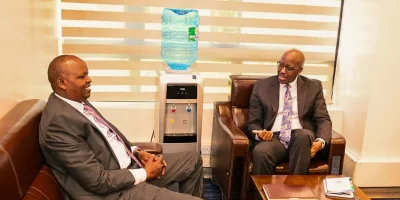

NAIROBI, Kenya Nov 6 – Interior Cabinet Secretary Fred Matiangi has assured Independent Policing Oversight Authority (IPOA) of the government’s support to provide civilian oversight on the police service.
Speaking during the launch of the authority’s 2019 – 2024 Strategic Plan, Matiangi stated that this will help entrench accountability in the police service.
He further pointed out IPOA’s review of the police will ensure effective service delivery for all Kenyans.
“We will improve the security sector and improve our country as well,” he said.
Matiangi further acknowledged the great work IPOA is doing and urged them to help create a conducive environment for the police to discharge their duties.
“I would like to ask you help have a conducive atmosphere between the police and civilians,” he said.
The strategic plan by IPOA aims enhancing the authority’s role in conducting independent and impartial investigations, inspections, audits and monitoring of the National Police Service (NPS) to enhance professionalism and discipline within the service.
Also unveiled during the launch of IPOA’s strategic plan were two surveys – one conducted across 36 counties, which covered 5,961 households, and another which sampled 450 randomly selected police officers (in selected police stations) across 31 counties.
Among the 5,961 households interviewed, only 28 per cent of members who confirmed having witnessed police misconduct said they had reported the same to IPOA compared to 30 per cent in 2013.
The likelihood of reporting was higher among rural populations with about a third of respondents in rural areas reporting police misconduct in 2019, compared to 20.5 per cent among the urban residents.
According to information obtained from IPOA, most of the complaints of police misconduct are received from the public, non-state actors and faith-based organizations.
The surveys also evaluated IPOA case files, police case files and court case files to assess how police conduct investigation, documentation and presented of evidence, and court decisions.
Qualitative interviews explored perceptions about police abuse of power and how reported cases.
The report came at a time when civil society actors have faulted the slow pace at which cases of police excesses have been probed by IPOA.
Late last year an unarmed UK based University student who allegedly died in the hands of police in Kibra, Nairobi.
Reports at the time indicated the police who shot the student had visited a liquor brewer within the Kibra slum from whom they are said to have attempted to extort money.
23-year-old Carilton Maina was studying engineering at the University of Leeds and was only visiting his mother for the festive season after taking a brief break from his studies.
Police claimed he was part of a ‘notorious’ gang that had been terrorizing residents. A police report indicated the officers involved the shooting were responding to reports by residents.
Chapter 4 of IPOA’s 2019 – 2024 Strategic Plan states the implementation will be achieved through a consultative process with stakeholders in the justice sector.
There will be monitoring, evaluation and reporting along the process.