
For much of the past two decades, Kenyans have focused on creating wealth. Businesses have been built. Property portfolios have expanded. Investment options have multiplied. Financial inclusion has transformed how people save and transact. Today, Kenya has more than 42 million active mobile money accounts, a sign of how deeply financial services have become embedded in everyday life.
However, when I speak to clients today, the conversation is very different from the one I had five years ago. The first question is no longer where to find the highest return, but how to protect what has already been built.
Entrepreneurs want to separate personal wealth from business assets. Professionals want to know whether they are saving enough for retirement. Parents want to structure their investments around education and succession. Families want to prepare the next generation to inherit wealth responsibly.
That tells me something important: Kenyan investors are becoming more sophisticated. They are beginning to understand that creating wealth and preserving it require different strategies.
One of the biggest mistakes I encounter is the belief that a successful business is, by itself, a retirement plan. Many entrepreneurs have built valuable companies, yet much of their personal wealth remains tied to those businesses. When business and personal finances become inseparable, both become vulnerable. A downturn, an unexpected health challenge or a succession dispute can quickly put years of hard work at risk.
The same applies to family wealth. Most businesses in Kenya are family-owned. Many have grown through determination, sacrifice and entrepreneurial instinct. Far fewer have formal governance structures or succession plans. Conversations about handing over leadership are often postponed because they can be uncomfortable. Unfortunately, business continuity does not wait for the perfect moment.
Planning early is one of the most effective ways of protecting both family relationships and family wealth.
The investment environment is changing as well. During the recent period of high interest rates, many investors naturally gravitated towards money market funds and other fixed-income investments. That was a rational response to prevailing market conditions. As interest rates begin to moderate, however, investors need to ask a different question: How should portfolios change when yesterday’s strategy may not deliver tomorrow’s returns?
That is where wealth management adds value. The objective is not to recommend the investment of the moment, but to help clients build portfolios that reflect their goals, time horizons and tolerance for risk.
Some clients are building wealth. Others are preparing for retirement. Some are preserving family assets. Others are planning to transfer businesses to the next generation. These objectives require different solutions, not standard answers.
I have also observed a growing appreciation for advice over products. Technology has made investing easier than ever. Opening an investment account can now take minutes, while comparing products is simpler than it has ever been. However, access alone does not produce better financial outcomes.
Investors still need trusted advice to navigate changing tax rules, manage concentration risk and avoid making emotional decisions when markets become volatile.
That is particularly important because wealth today rarely sits in one place. A client’s balance sheet may include a family business, property, pension savings, unit trusts and regional investments. Looking at each asset independently can obscure the bigger picture. Effective wealth management considers how those assets work together to achieve long-term financial objectives.
In my estimation, the future of wealth management will be less about selling financial products and more about helping families make better financial decisions. It will place greater emphasis on governance, succession, tax efficiency and disciplined investing.
Most importantly, it will recognise that every client’s circumstances are different. Advice should therefore reflect that reality rather than offer standard solutions.
Kenyans have demonstrated that they can create wealth. The next challenge is ensuring that this wealth lasts.
That requires planning, discipline and a willingness to have conversations that are often delayed until it is too late.
In my view, the true measure of wealth is not what we accumulate during our working lives, but what we preserve, grow and pass on.
Creating wealth changes lives. Preserving it changes generations.
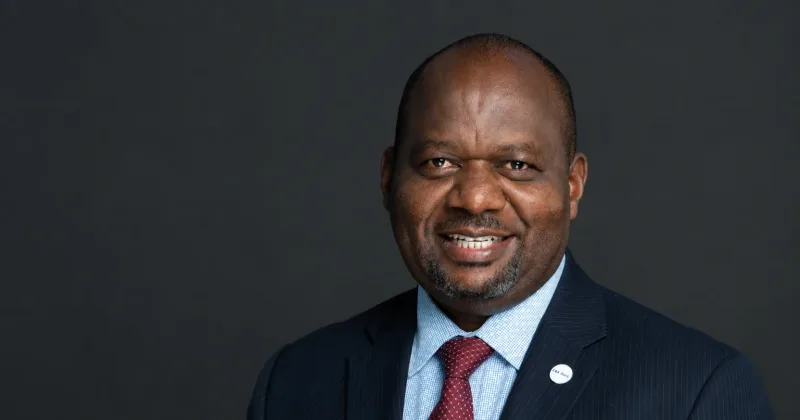
The author is the Chief Executive Officer I&M Capital Limited.