
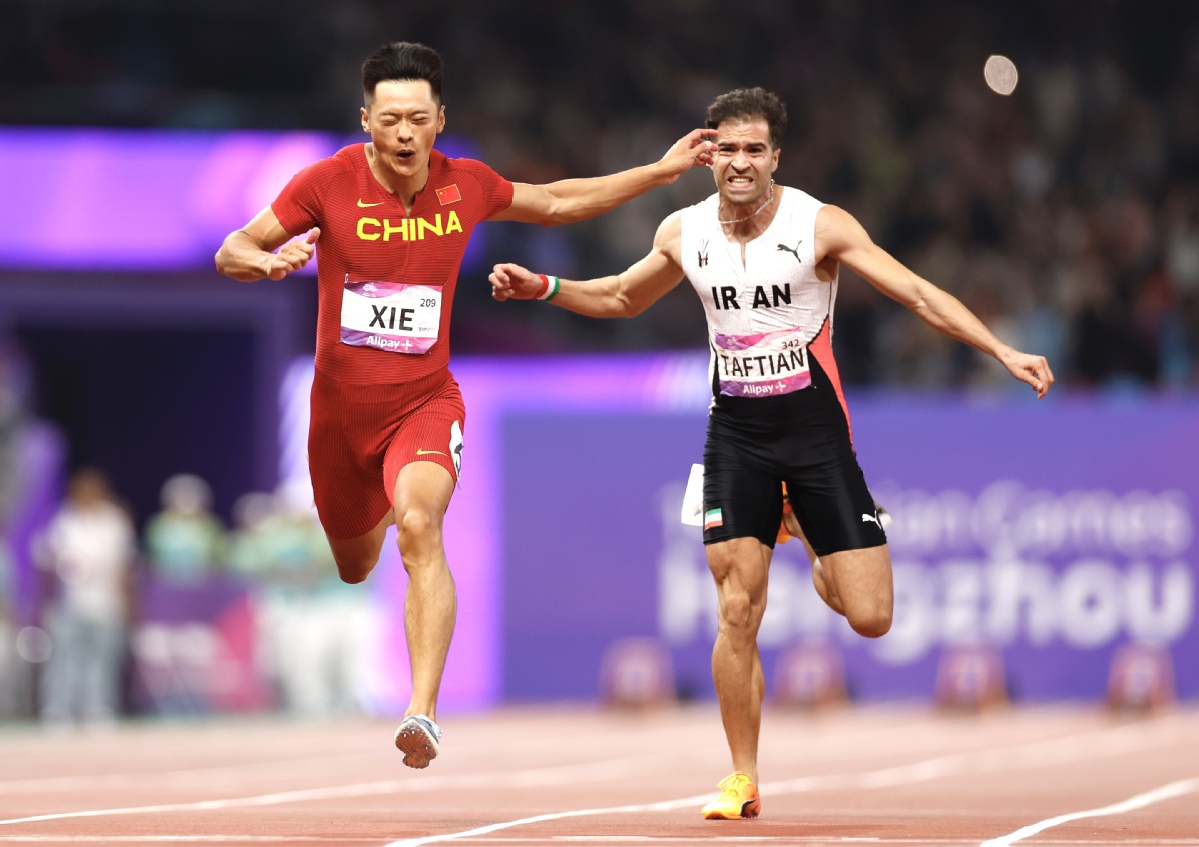
The resounding success of the 19th Asian Games, known as Asiad, hosted by China in Hangzhou, has not only left a mark on Asia but also serves as an inspiration for Africa. Asiad’s remarkable journey has earned it international acclaim akin to the Olympic Games. This year, with more than 12,000 athletes from 45 member nations of the Olympic Council of Asia, it surpassed the Tokyo Summer Olympics in terms of participation, with 40 competitive sports and 142 additional gold medals up for grabs.
Africa has long sought to replicate the success of its Asian counterpart in the realm of sports. These two continents, rather than being at odds, often find convergence in their thinking and actions. They share common geopolitical underpinnings in international affairs, which present opportunities for cooperation and shared achievements. Just as Asia has excelled in sports, Africa is teeming with sporting talent. While athletics and football tend to dominate, various countries and regions have their specialties.
For instance, Kenya is a global powerhouse in long-distance running, while West African nations produce some of the finest professional footballers who play for top European clubs. With the right support and incentives, African countries can compete more effectively in global sporting events, including the Olympics.
Furthermore, the introduction of the African Games could yield indirect benefits beyond the realm of sports. It has the potential to foster political unity, a long-sought goal that has often eluded post-independence Africa. Historically, the division of Africa by European colonialists overlooked ethnic and cultural boundaries, contributing to intra-country and inter-country conflicts. A continental sporting event could help establish lasting peace and unity across the continent.
Colonialism also disrupted many African cultures, resulting in a loss of self-identity, pride, and authenticity among Africans. This cultural gap has been exploited by former colonizers for socioeconomic and political gain. A continental sports event has the potential to serve as a melting pot, promoting the creation of a universal African culture that bridges cultural divides.
Economically, the benefits are substantial, especially as the African Continental Free Trade Area (AfCFTA) gains traction. A continental sporting event would align with AfCFTA’s objectives, facilitating increased intra-continental trade, tourism, transportation, communication, and financial services, among other sectors.
Africans are often criticized for not speaking with one voice on matters of mutual welfare and development. A continental sporting event, modeled after the principles of the Olympic Games, could enhance understanding and collaboration between African countries, positively impacting other intercontinental and global forums.
The African Union Sport Council (AUSC) is the logical starting point for promoting a continental sports event. Established in 2016, the AUSC is mandated to coordinate the African sports movement and act as a forum for concerted action among member states to promote sport and development through sport in Africa.
An African Games event would extend beyond competition; it would be a platform for cultural rediscovery and renaissance, where the continent’s unique social and cultural ideologies can be articulated. This approach mirrors the success of the Asiad, which has evolved over its chequered history since the first Asian Games held in Manila, Philippines, in 1913.
The concept of African Games is not solely about winning medals; it is about demonstrating the resilience of the human spirit in the face of formidable challenges. Africa’s Games would be a testament to the unwavering endurance of the African mind, body, and soul and a celebration of the continent’s rich history and achievements.
In conclusion, the success of the Asiad is an inspiration for Africa to channel its sporting potential into an African Games event that fosters unity, cultural revival, and economic growth. Such an event would resonate with the continent’s spirit of resilience and serve as a testament to its enduring strength and achievements. Africa is poised to create its own sporting legacy, inspired by the triumphs of Asia’s Asiad.