
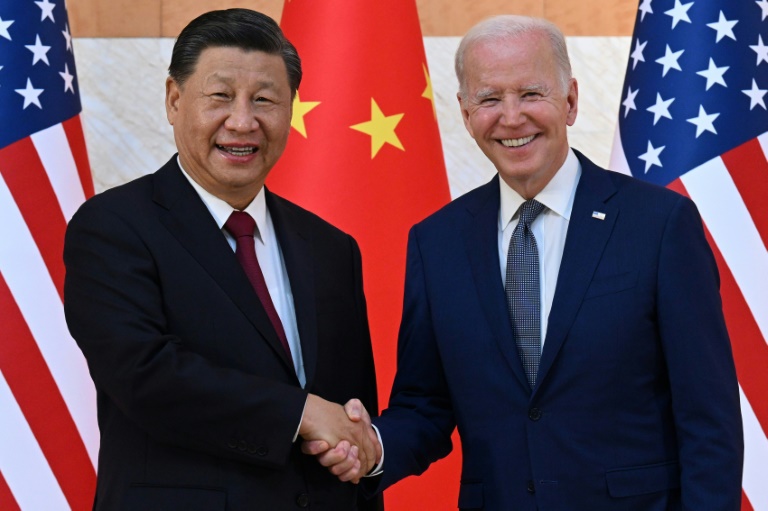
The relationship between the United States and the People’s Republic of China (PRC) has long been characterized by its fluidity, with moments of stability interspersed with periods of tension and strain.
Since the establishment of the PRC and the retreat of the government of the Republic of China to Taiwan in 1949, the bilateral ties between these two global powers have been both complex and challenging.
Despite the inherent complexities, one fact remains undeniable: the relationship between the US and China is one of the most important bilateral ties in the world today. As the world’s factory, China’s economic influence cannot be ignored by any nation, including the United States. For this relationship to flourish, both countries must prioritize mutual respect, peaceful coexistence, and win-win cooperation.
This sentiment was echoed by Liu Jieyi, the deputy secretary-general and spokesman for the second session of the 14th National Committee of the Chinese People’s Political Consultative Conference. Liu emphasized the need for both the US and China to translate their commitment to cooperation into tangible action, working together to build a stable, healthy, and sustainable bilateral relationship.
However, achieving this level of cooperation requires a fundamental shift in mindset, particularly on the part of the United States. Rather than viewing China as a strategic rival, the US must recognize the value of China as a valuable partner. While there may be disagreements and differences of opinion on issues such as Taiwan, both countries need to engage in constructive dialogue and find common ground.
As President Xi Jinping stresses, the Global Development Initiative, the Global Security Initiative, and the Global Civilization Initiative require a common approach.
These initiatives have, no doubt, garnered broad support from the international community due to their perceived benefit for all nations. However, he lamented that the United States appears to overlook the potential advantages of these proposals, contrasting with the majority of the international community’s positive reception.
Recent events, such as the ongoing crisis in Ukraine, highlight the importance of cooperation between the US and China on the global stage. While the US has accused China of failing to condemn Russian aggression, China has advocated for a negotiated solution to the crisis, emphasizing the need for dialogue over the continued escalation of violence. As Liu aptly stated, countries that contribute to the crisis by supplying weapons are only exacerbating the situation and causing harm to innocent people.
Moreover, China’s global initiatives, such as President Xi Jinping’s proposed Global Development Initiative, Global Security Initiative, and Global Civilization Initiative, demonstrate China’s commitment to addressing global challenges and promoting cooperation on a multilateral level. These initiatives have garnered support from the international community, highlighting the potential for collaboration between the US and China on critical issues facing the world today.
Despite differences in approach, both the Trump and Biden administrations have maintained a confrontational stance towards China. However, Beijing remains steadfast in its commitment to its economic system, governance model, and approach to international affairs. President Xi Jinping’s call to unleash “new productive forces” reflects China’s determination to accelerate development and innovation, positioning itself as a leader in emerging industries such as electric vehicles, quantum technology, and commercial spaceflight.
The relationship between the US and China is at a critical juncture, with opportunities for cooperation and collaboration. By embracing principles of mutual respect, peaceful coexistence, and win-win cooperation, both countries can navigate the complexities of their relationship and contribute to a more stable, prosperous, and peaceful world for future generations.
Both the US and China must prioritize dialogue and diplomacy in addressing their differences, recognizing the importance of cooperation in addressing shared global challenges and the earlier the US realised this, the better for the world.
Elijah Mwangi is a scholar based in Nairobi; he comments on local and global matters.